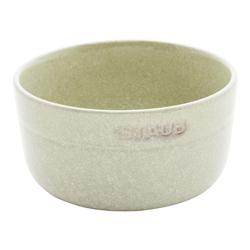
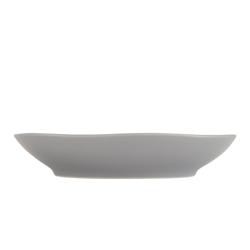
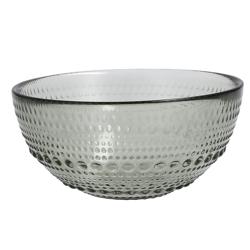
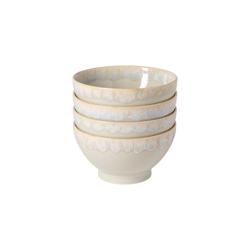
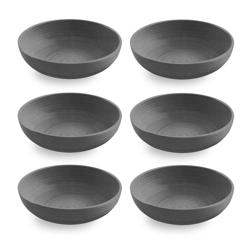
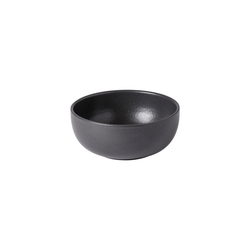
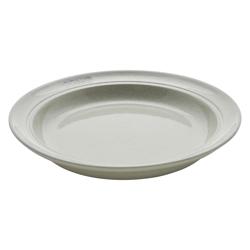
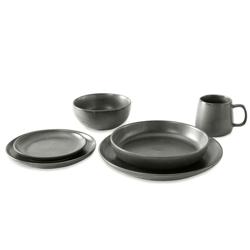
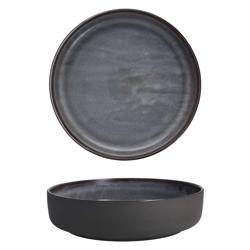
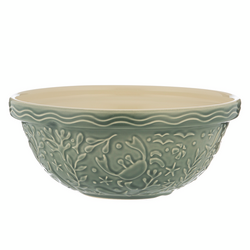
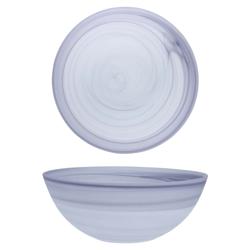
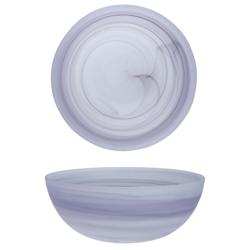
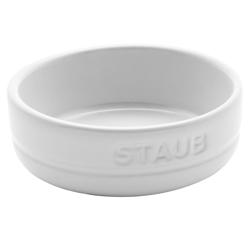
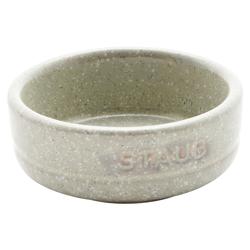
Gray bowls for fruit and yogurt are everyday serving bowls that pair a neutral finish with a size and shape suited to individual breakfasts, snacks and desserts. Their understated color gives sliced strawberries, blueberries and golden peaches a clear backdrop without competing with the rest of the table. Pale gray can sit comfortably alongside white dinnerware, while charcoal brings more contrast to a spoonful of yogurt or a scattering of toasted coconut. Undertones matter, too: a gray with a hint of beige feels different beside cream-colored plates than a cooler gray with a blue cast. For a coordinated table, repeating a similar undertone often matters more than matching every piece exactly. These bowls also make sense for the way breakfast actually happens, whether that means a quick serving of Greek yogurt before work or a leisurely meal with several toppings within reach. A smaller bowl keeps a modest portion of berries or applesauce contained, while a roomier bowl leaves space for bananas, granola and a spoonful of nut butter. As a general starting point, a capacity around 10 to 16 ounces works for many individual servings, though the right fit depends on how much fruit and topping you add. Stated capacity describes volume, not necessarily the amount that feels comfortable to carry or stir, so a little extra room can be useful. Shape changes the experience just as much as capacity. A broad, shallow interior spreads toppings across the surface, making it easier to get fruit, yogurt and crunch in the same bite. Deeper sides help contain loose berries and give you room to fold honey into yogurt without pushing it over the edge. A gently curved interior lets a spoon follow the bottom more easily than a sharply angled corner. Together, those details help a simple bowl feel well suited to the food you enjoy most.
Material and finish influence how gray breakfast bowls look, feel and hold up to repeated use. Stoneware often has a substantial feel that suits relaxed everyday place settings, while porcelain can offer a more refined profile without necessarily being reserved for special meals. Thickness and weight vary within both materials, so the material name alone does not tell you how heavy a bowl will feel in your hand. Ceramic is a broad category that includes stoneware and porcelain; product details are more useful than that general label when comparing construction and care. Glass offers another possibility, with transparent or opaque finishes creating a different effect from glazed pottery. For households that need lightweight, break-resistant tableware, materials such as melamine may be practical, provided their intended use and care instructions suit the routine. Melamine should not go in the microwave. With any material, durability depends on construction, handling and proper care rather than color or appearance. A thick rim may feel reassuring, but no ceramic bowl is immune to chips from a hard knock against the sink. Surface finish deserves similar attention. Glossy gray reflects light and can make a place setting feel crisp, while matte gray has a softer, more muted appearance. Speckling or tonal variation adds visual interest without introducing another strong color. Some matte ceramic glazes show utensil marks more readily than glossy surfaces, although this varies by glaze and use. A smooth food-contact surface is useful for yogurt, fruit purées and sticky honey because there are fewer textured areas to clean. Dishwasher-safe construction can simplify daily cleanup, but that designation should be confirmed for each bowl rather than assumed from its material. Microwave safety is a separate consideration, especially if the same bowls will also hold oatmeal or reheated leftovers. Follow the manufacturer's directions for heat exposure and avoid sudden temperature changes with ceramic or glass. When hand-washing, a soft sponge and mild dish soap are sensible starting points; use only cleaning methods recommended for the finish.
The best fit for your kitchen also includes the space around the bowl: the cabinet shelf, the dishwasher rack and the breakfast tray. Bowls with a stable base are easier to set down beside a coffee cup, and a comfortable rim makes carrying a serving from counter to table feel natural. A wide opening is inviting for a generous fruit-and-yogurt breakfast, but it takes up more room than a narrower bowl with a similar capacity. Stackable shapes can help keep a small kitchen organized, especially when bowls are used daily and need to be easy to reach. Check dimensions as well as volume if shelf clearance is limited, and avoid forcing pieces into a tight stack where rims can rub or catch. For shared households, having enough bowls for the people who regularly eat breakfast together, plus a few for guests or the dishwasher rotation, can be more useful than choosing solely by appearance. Matching gray bowls bring consistency to a table, while mixed gray finishes can work well when their shapes or undertones have something in common. Individual bowls also pair naturally with
Gray Coupe Serving Bowls for presenting a larger portion of cut fruit at the center of the table. That arrangement lets everyone build a serving to taste rather than committing the whole batch to yogurt or sweetener. Beyond breakfast, these versatile bowls can hold pudding, a scoop of ice cream, a small salad or a handful of nuts, depending on their size. Their usefulness across several meals makes them a thoughtful housewarming gift or a practical addition to a first kitchen. For a recipient who already has dinnerware, a compatible gray tone and an easy-care finish may matter more than a perfect match. Whether your routine calls for carefully arranged kiwi slices or a quick handful of berries over yogurt, a bowl with the right proportions makes everyday food comfortable to serve and enjoyable to eat.