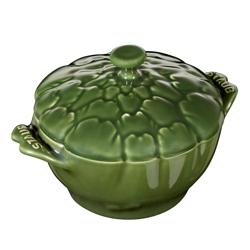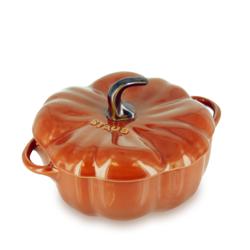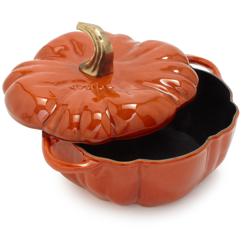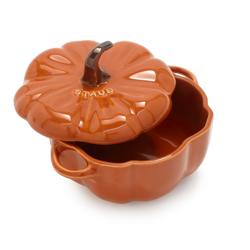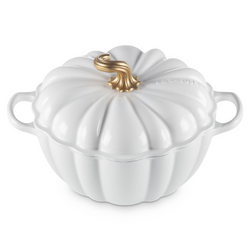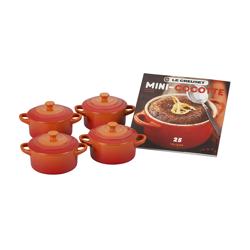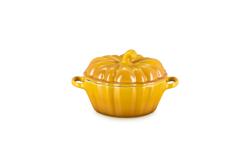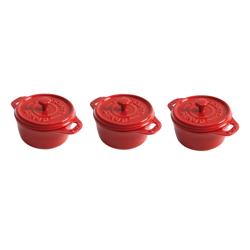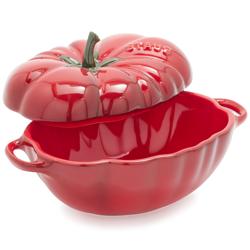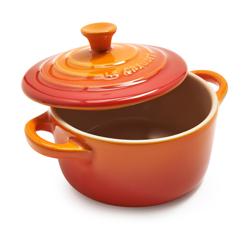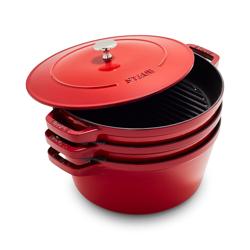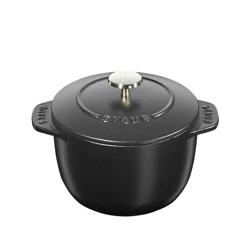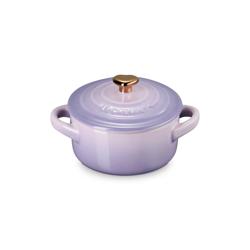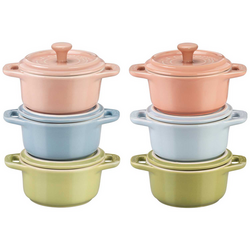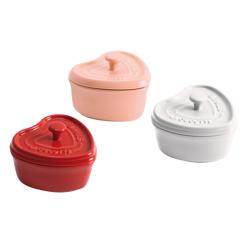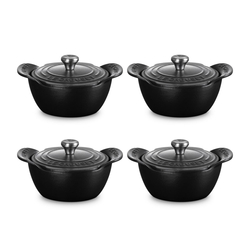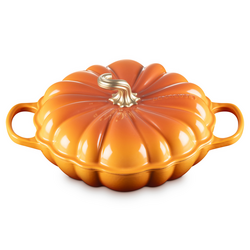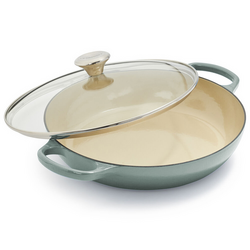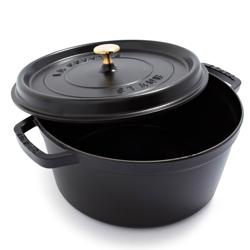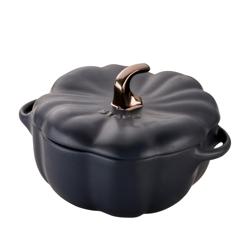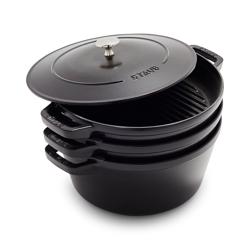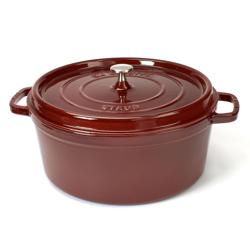
Harvest cocottes are lidded cooking and serving dishes with autumn-inspired shapes, colors or decorative details, designed to bring a seasonal touch to baked dishes, slow-cooked meals and the table. The category includes petite vessels for individual portions and larger dishes for sharing, with materials such as stoneware and enameled cast iron suited to different kinds of cooking. Pumpkin silhouettes, gently ribbed sides and stem-shaped lid knobs give these pieces their harvest character without taking away their practical purpose. Filled with roasted squash soup, a bubbling vegetable gratin or an apple dessert, a cocotte becomes part of the meal’s presentation rather than simply the dish that holds it. The term cocotte traditionally refers to a covered cooking pot, though small ceramic versions are also useful for baking and serving individual portions. That distinction matters: a miniature stoneware cocotte and a substantial cast iron cocotte may share a similar silhouette, but they are not interchangeable on the stovetop. Their appeal is the combination of useful cookware and thoughtful table detail. A covered dish can carry a side from oven to table, while a row of small cocottes gives each place setting its own serving of baked macaroni or savory bread pudding. Harvest shapes work naturally with linen napkins, simple white plates and wood serving boards, letting the food and the dishes provide much of the decoration. Earthy colors can blend quietly into an everyday setting, while richer autumn hues create a more noticeable accent. For a Thanksgiving gathering, the same style feels at home beside roasted vegetables, dressing and cranberry accompaniments. Related
Thanksgiving Cocottes offer another way to explore covered dishes with that celebration in mind. Whether the occasion is a family dinner, a potluck or a carefully set holiday table, harvest cocottes give familiar recipes a presentation that feels considered without requiring elaborate garnishes or extra serving pieces.
Material, capacity and shape help determine how a harvest cocotte will fit into your cooking routine. Enameled cast iron has substantial weight and holds heat well, making it useful for dishes that benefit from steady cooking, such as braised meat, beans and hearty stews. When a piece is approved for stovetop use, it can allow browning and simmering in the same vessel before a dish moves to the oven, provided the pot, lid and knob are all rated for the intended temperature. Its enamel coating generally removes the need for seasoning, although it still calls for thoughtful handling. Stoneware is often a good match for oven-baked sides, custards and fruit crumbles, and many pieces can also serve chilled accompaniments. It should not be treated as stovetop cookware unless the manufacturer specifically permits that use. For individual servings, think beyond the stated capacity to the food itself: a rich baked dessert may need less room than a portion of potpie with a generous pastry top. Leave the headroom your recipe requires for rising batter, expanding fillings or bubbling sauce. Larger cocottes are better suited to shared sides and main dishes, but the number of servings will depend on both capacity and portion size. A broad, shallow interior gives a gratin more exposed surface, while a deeper vessel accommodates layered ingredients or a stew with plenty of broth. Sculpted sides and decorative lids can also affect usable space, so exterior dimensions do not tell the whole story. Check that the dish fits your oven rack, especially if a tall stem knob adds height, and consider how several small cocottes will sit together on a baking sheet. Handles should leave enough room for a secure grip with oven mitts. A filled cast iron vessel can be heavy, so a comfortable carrying weight matters just as much as its appearance. For dishes that need a crisp, browned top, recipes may call for baking uncovered; a decorative lid is useful, but it does not need to stay on for every preparation.
The best harvest cocottes earn their place through repeated use, not just a single holiday appearance. Small covered dishes can hold baked eggs for a leisurely breakfast, warm spinach dip for a gathering or individual pear crisps after dinner. A larger cocotte can move from a shared vegetable side to a slow-simmered supper when its material and cooking specifications allow. For someone who enjoys hosting, a gift of harvest-inspired cookware offers both a cooking vessel and a serving piece; for a baker, smaller oven-safe cocottes open up possibilities for portioned desserts and savory bakes. The most thoughtful choice reflects how the recipient cooks, how many people they usually serve and how much storage space they have. Someone with compact cabinets may appreciate a smaller dish more than a large, sculptural pot, while a cook who often brings sides to family meals may value a generous serving capacity. Keep in mind that a fitted lid is not necessarily leakproof, so filled cocottes should remain upright and secured during transport. Care also plays a part in long-term usefulness. Follow the manufacturer’s instructions for oven limits, microwave compatibility and dishwasher use rather than assuming every harvest cocotte can go in the same appliances. Metal cookware does not belong in the microwave, and lids with decorative hardware may have different care requirements from the vessel below. Let hot cookware cool before washing, avoid sudden temperature changes and use nonabrasive cleaning tools to help protect glazed or enameled surfaces. Wood or silicone utensils are a gentle choice for stirring and serving. Although these materials can be durable, ceramic bodies can chip or crack and enamel can be damaged by impacts, making careful storage worthwhile. Protective separators help keep nested pieces from rubbing, and lids should rest securely rather than balance on delicate knobs. At the table, use a heat-safe trivet and remember that handles and lids may remain hot after serving. With a size that suits your recipes and care that suits the material, a harvest cocotte can become a familiar part of autumn meals, holiday gatherings and the comforting dishes shared beyond them.