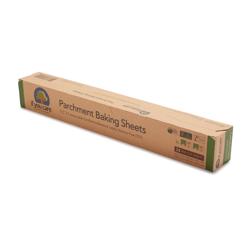
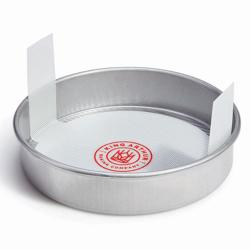
Parchment paper for cheesecake pans provides a nonstick barrier between the crust and the pan, helping a fully chilled cheesecake release more cleanly for serving. It is especially useful when the cake needs to leave its baking base for a serving plate, rather than stay on the metal insert. A buttery graham cracker crust can cling to a pan even when the filling has set beautifully, and a paper liner helps separate that crust from the surface beneath it. The most useful format depends on the pan’s shape, its interior dimensions and the kind of cheesecake being made. Precut parchment rounds offer a convenient fit for round bases, while sheets and rolls allow more flexibility for square pans, rectangular pans or recipes that call for paper extending up the sides. For a close-fitting base liner, the measurement that matters is the inside diameter where the crust sits, not the width across the pan’s outer rim or handles. A round that is too large can curl against the walls and leave folds at the edge of the crust; one that is too small leaves part of the base uncovered. Springform pans and removable-bottom pans both benefit from a liner, although their release mechanisms work differently. In a springform pan, a larger sheet can sometimes be secured between the base and the ring, provided the pan still closes properly. A fitted round instead rests inside the assembled pan without excess paper outside it. Neither arrangement makes a springform pan watertight, so protection for baking in a water bath remains a separate consideration. Side liners serve another purpose: they create a barrier between the filling and the pan wall. Smooth strips suit recipes where a neat edge matters, while a full sheet naturally produces more folds. Matching the liner to the recipe helps preserve the intended finish, whether that is a smooth-sided cheesecake or a cake with a deliberately rustic outline.
Material and heat suitability matter just as much as shape. Baking parchment is commonly made from cellulose paper treated for heat resistance and release, often with a silicone coating that helps food separate from its surface. White and brown parchment can both be suitable for cheesecake; color alone does not establish oven safety, coating quality or release performance. The package’s intended uses and maximum baking temperature are more useful points of comparison. Wax paper is not a substitute for oven-safe parchment because its coating is not intended for baking exposure. Even baking parchment has limits, and it should stay away from heating elements, open flames and broiler heat. This distinction is particularly important for Basque-style cheesecake, which typically uses a generous parchment lining and a hotter oven than many traditional cheesecake recipes. Its crumpled paper collar accommodates the filling and contributes to the cake’s characteristic folded sides, but the parchment still needs a temperature rating appropriate for the recipe. For a classic cheesecake with a pressed crumb crust, a flat base liner usually offers a more discreet result. Thick folds beneath the crumbs can create an uneven foundation, while paper bunched along the sides can leave impressions in the filling. No-bake cheesecakes benefit from parchment for a different reason: the liner helps separate a chilled crust from its base without baking being part of the process. Firmness still comes from the recipe and adequate chilling, not from the paper itself. A soft filling or loosely packed crust will remain delicate even with an effective liner. Parchment can reduce sticking, but it cannot prevent every crack, compensate for an underbaked center or make a warm cheesecake sturdy enough to move. For home bakers comparing options, the practical priorities are straightforward: a suitable heat rating, reliable release and a format that lies comfortably in the chosen pan. Those qualities matter more than whether the paper looks particularly thick or has a particular color.
Everyday handling also makes a difference when choosing parchment for cheesecake baking. Rolls offer flexibility for bakers who use several pan sizes, while precut rounds reduce measuring and trimming when the same round pan gets regular use. Flat sheets are convenient when a recipe needs a broad lining or when several smaller shapes will be cut from one sheet. Paper should be sturdy enough to position without tearing easily, yet flexible enough to settle into the pan without bulky bunching. Clean, dry storage helps protect that performance: a flattened sleeve or enclosed dispenser keeps sheets away from splashes, grease and crushed edges. Parchment used beneath cheesecake should generally be treated as a single-use liner, particularly after contact with moist filling or a buttery crust. It is not washable bakeware, and a fresh piece is a better starting point than paper weakened by moisture, tears or baked-on residue. At serving time, the liner is a release aid rather than structural support. A tall cheesecake still needs its base supported as it moves, and paper tabs or overhang should not be relied on to carry the cake’s full weight. This is worth considering for anyone baking a dessert that must travel to a birthday dinner, an anniversary celebration or a potluck. A well-chilled cake, a stable serving surface and a liner suited to the pan make that transition more manageable without promising a flawless result every time. Parchment is also a practical addition to a baking gift for someone who enjoys testing cheesecake recipes or has recently added a removable-bottom pan to the kitchen. It is an unassuming supply that gets used at a particularly important moment: separating hours of careful baking and chilling from the pan. For a broader look at complementary baking tools and presentation pieces, explore
Cheesecake Baking & Serving Essentials. Choosing parchment with the right dimensions and intended use keeps attention on the finished dessert, from a crisp crumb base to the clean slice placed on each guest’s plate.