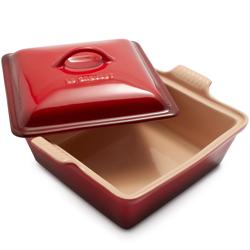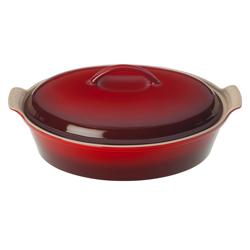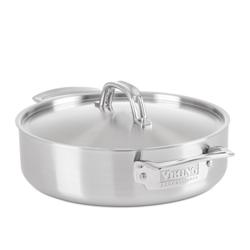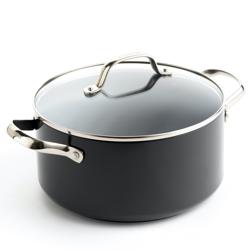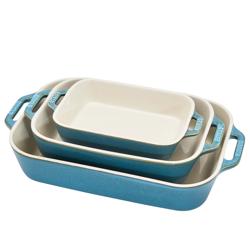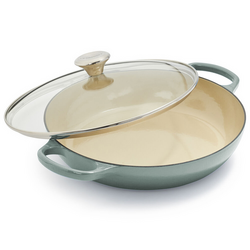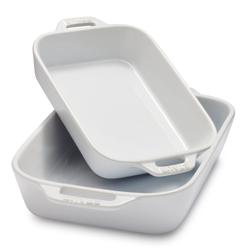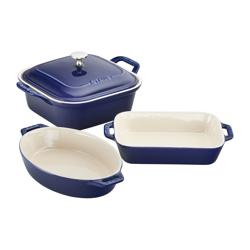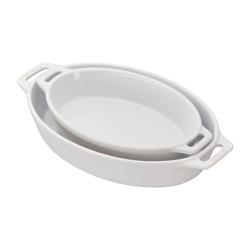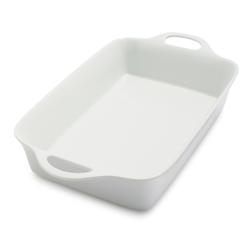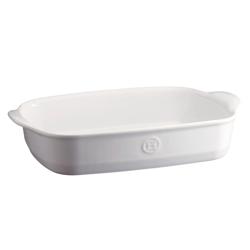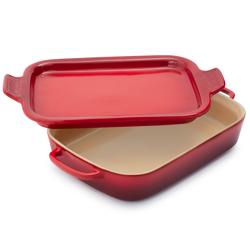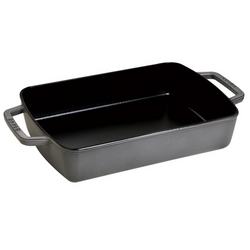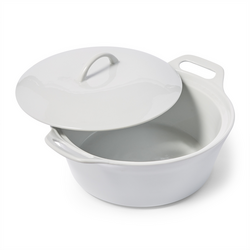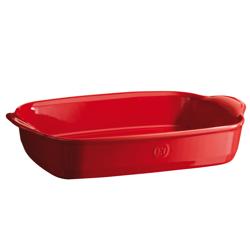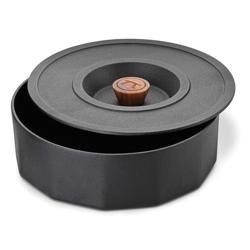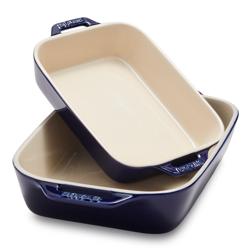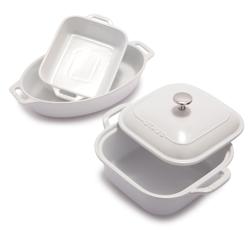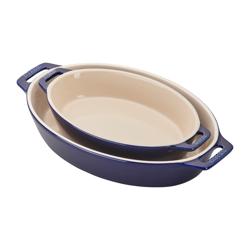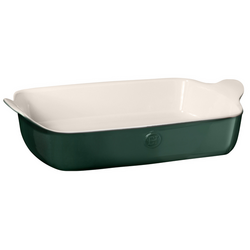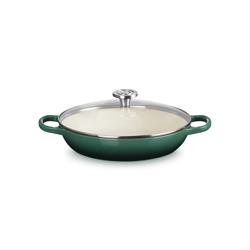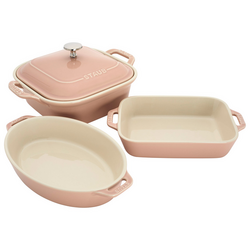
Picnic casseroles are portable baked dishes made for sharing, from smoky baked beans with bacon to cheesy potatoes, baked pasta and vegetable gratins. Casserole bakeware supports that oven-to-table role, giving hearty recipes room to cook evenly and a practical serving vessel once everyone gathers. For a picnic, the right dish needs to suit both the food and the trip: its capacity, weight, handles and cover all affect how comfortably it moves from the kitchen to a shared table. A broad, shallow casserole gives macaroni and cheese or a potato bake more surface area for a golden topping, while a deeper shape accommodates generous layers of rice, vegetables or saucy beans. Neither shape is automatically better for travel; a manageable size with enough headroom below the rim is often more useful than an oversized dish filled to the top. Rectangular bakeware makes familiar layered recipes easy to portion, while round and oval casseroles work well for spoonable sides passed around a table. These dishes are useful for family picnics, neighborhood potlucks and casual outdoor meals where everyone contributes something substantial. They also make sense for the cook who prefers preparing one generous dish rather than packing several separate components. A casserole that looks at home on the table can reduce the need to transfer food into another serving bowl, although hot bakeware still needs a stable, heat-resistant surface underneath. Simple colors let a browned topping or bright vegetables stand out, while a patterned exterior adds interest to a spread of sandwiches, salads and shared sides. The most useful choice balances that visual appeal with everyday handling, so the dish earns its place at home as readily as it does at a gathering. Picnic casserole dishes are not limited to one signature recipe, either. The same well-chosen shape can hold baked beans for a group lunch, a savory bread pudding for brunch or a pasta bake for a family dinner.
Material makes a noticeable difference in how casserole bakeware cooks, carries and cleans. Stoneware and other oven-safe ceramics are familiar choices for baked dishes because they retain heat and bring a finished look to the table. Their substantial feel can be reassuring during serving, but the combined weight of the vessel and a full casserole matters when carrying food any distance. Porcelain can offer a smooth serving surface and a refined appearance, though its weight and durability depend on the individual construction rather than the material name alone. Oven-safe glass makes it easier to see browning along the sides and check the layers beneath a bubbling top. Like ceramic, it requires care around sudden temperature changes; a hot dish should not meet a cold, wet surface, and refrigerator-to-oven use should follow the manufacturer's directions. Metal bakeware is often lighter to carry, with heating and browning behavior that varies by material, thickness and finish. Enamel-coated cast iron holds heat well but adds considerable weight before any food goes in, making it worth considering the distance between the kitchen, car and picnic table. Across materials, broad handles with room for oven mitts can make lifting more comfortable, especially when the recipe is heavy or has a loose sauce. A fitted lid may protect a delicate topping better than foil pressed close to the food, but a lid is not necessarily leakproof or suitable for the oven. Cover materials and temperature limits deserve a separate check from those of the dish itself. Fit also extends beyond the oven: a casserole should sit level in its carrier, leave room for protective padding where needed and be easy to set down without crowding the rest of the meal. For cooks drawn to vegetable bakes and other dishes for outdoor sharing,
Summer Casseroles offers a related bakeware theme to explore. Whatever the recipe, choosing a shape that matches its depth and volume helps prevent an uneven bake or a difficult-to-manage serving dish.
Capacity is most useful when considered alongside the recipe and the way the meal will be served. A casserole contributing a side dish to a generous potluck has a different job from one carrying the main course for a family picnic. Published capacity alone does not describe the usable space for a bubbling bake, and two dishes with the same capacity can have quite different depths and footprints. Matching the dimensions called for in a recipe is a dependable starting point, with room left for expansion and safe handling rather than filling to the rim. At the table, accessible corners and a wide opening make it easier to reach the last spoonfuls without tipping the dish. During transport, a cover helps contain the food, but the casserole still needs to remain upright and secure; an insulated carrier is useful only when its fit and temperature limits suit the vessel. Heat retention should never be treated as a substitute for safe food handling. Perishable food generally should not remain outside safe hot or cold holding conditions for more than two hours, or one hour when the surrounding temperature exceeds 90 degrees Fahrenheit. For everyday care, a smooth interior and gently rounded corners can make baked-on sauce easier to remove. Dishwasher-safe construction may simplify cleanup, while hand-washing requirements, utensil restrictions and broiler limits vary by material and finish. Allowing bakeware to cool before cleaning, avoiding abrasive tools where prohibited and protecting rims from knocks can help preserve its surface. Nesting shapes are convenient for smaller kitchens, provided the dishes are designed to stack and their finishes are protected. Those practical details also make casserole bakeware a thoughtful gift for a frequent host, a newly established household or someone known for bringing the dish everyone requests. A versatile size and comfortable handles usually matter more than an elaborate presentation. The goal is a dependable piece of bakeware that feels familiar in use, whether it holds a bubbling bean casserole for a picnic or dinner ready to share at home.