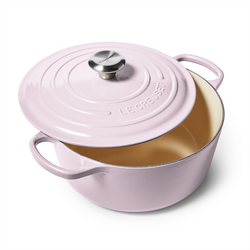
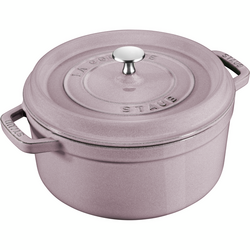
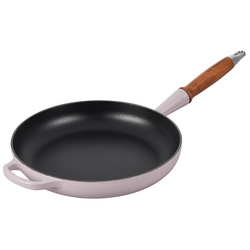
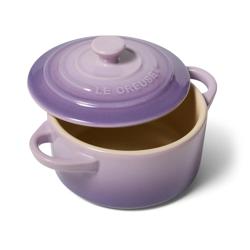
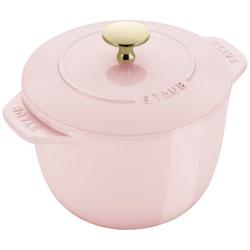
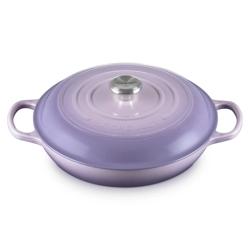
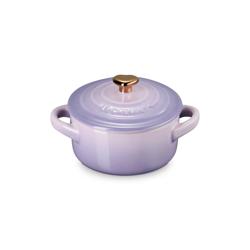
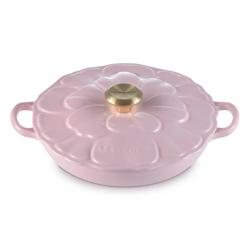
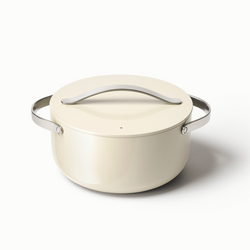
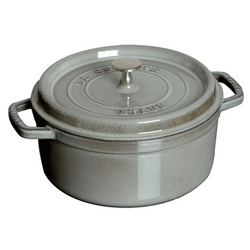
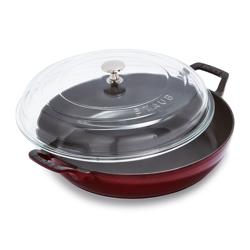
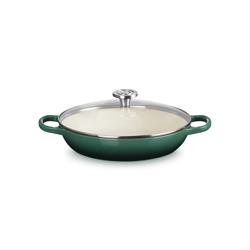
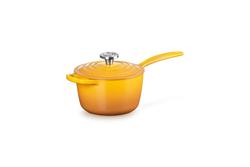
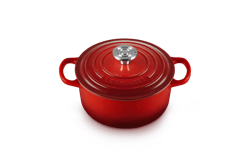
Shallot color cookware has a soft, muted lavender-pink hue with gray undertones, giving it the versatility of a neutral with a little more warmth and personality. The shade falls between pale purple and blush pink rather than reading as a bright pastel, making it an easy companion to both traditional and modern kitchens. Against white cabinetry, it adds a gentle wash of color; beside natural wood, cream linens and brushed metal, it feels understated and inviting. Its appearance can shift with the light, looking pinker in warm afternoon sunshine and more lavender under cooler lighting. That subtle character makes shallot a useful choice when you want cookware that can sit on the stovetop without dominating the room. It also carries naturally to the table, where its pale exterior provides a quiet backdrop for golden crusts, deep red sauces and leafy green vegetables. During the cooler months, a steaming meal served in softly colored cookware can make an everyday dinner feel considered without requiring a formal place setting. For a coordinated kitchen, repeat the shade in small touches rather than matching every surface. Clear glass, plain dinnerware and textured towels let the color stand on its own, while charcoal or dark wood creates a stronger contrast. If you prefer a mix of cool shades,
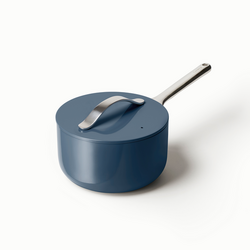
Blue Color Sauteuse Pots offer another color direction to consider alongside shallot’s pink-lavender tones. Choosing a color you enjoy seeing is practical as well as personal, especially when larger cookware stays out between meals. Still, color describes the exterior, not the cooking performance. The material, shape and construction determine how cookware handles heat, which recipes it suits and how comfortable it feels to use. Shallot brings a consistent visual mood to a kitchen, but each piece should earn its place through the way it supports your regular cooking.
When comparing shallot-colored cookware, start with the meals you make most often and the material listed in the product details. Enameled cast iron is particularly well suited to steady cooking because it retains heat effectively once warmed. That makes it useful for gently simmering beans, braising meat until tender or keeping a dish warm as everyone gathers at the table. It is also heavy, especially when full, so consider whether you will be comfortable lifting it from a lower cabinet or moving it between the stovetop and oven. The enamel covering cast iron does not require the seasoning associated with bare cast iron, but it should not be confused with a nonstick surface. Appropriate preheating, a little cooking fat when needed and enough time for food to release help make everyday cooking more manageable. Enameled stoneware, where specified, serves a different purpose: it is generally intended for oven baking and serving rather than direct stovetop heat. Always check the individual use instructions instead of assuming that matching colors mean matching capabilities. Shape matters just as much as material. A broad cooking surface gives vegetables and meat room to brown without crowding, while greater depth accommodates liquids and taller ingredients. A close-fitting lid helps limit moisture loss during a long simmer, and a wider opening encourages evaporation when reducing a sauce. Capacity should reflect both your usual portions and the occasional larger meal. Cooking for one or two may call for a more manageable size, while batch cooking or hosting often makes extra room worthwhile. Leave enough headroom to stir without splashing, but remember that a larger capacity also means more weight and storage space. Check the full dimensions, including handles, against your oven, cabinet shelves and cooking surface. For induction cooking, verify compatibility in the specifications; for oven use, check the limits for the entire piece, including its lid and knob. Handles that feel easy to grip with thick oven mitts can make a meaningful difference when dinner is hot and ready to serve.
Thoughtful care helps preserve both the finish and the usefulness of shallot color cookware. A pale exterior can make splashes and baked-on drips more noticeable, so cleaning after each use is easier than letting residue accumulate through several meals. Let cookware cool before washing, then use warm water, mild dish soap and a soft sponge, following the manufacturer’s directions for the particular material. Avoid plunging hot cookware into cold water, since abrupt temperature changes can damage enamel or cause thermal shock in ceramic materials. For stubborn food, soaking is often a better first step than aggressive scrubbing. An approved enamel cleaner may help with persistent marks on compatible surfaces, but abrasive pads and harsh cleaning methods can dull or damage a finish. Even when cookware is labeled dishwasher safe, hand-washing may be recommended to help maintain its appearance over time. Dry thoroughly before putting it away, paying attention to rims and any exposed metal. Wooden or silicone utensils are gentle choices for enameled interiors, and a protective layer between stacked pieces helps prevent hard edges from knocking against one another. Enamel is durable, but it is not immune to chipping from drops or impacts; moving heavy cookware carefully is part of keeping it in good condition. These habits are straightforward enough for everyday use, whether you cook a quick supper most nights or set aside an afternoon for a slow-cooked meal. Shallot’s restrained color also makes it a thoughtful gift for someone furnishing a first kitchen, celebrating a wedding or replacing cookware that no longer suits their routine. Consider the recipient’s cooking habits, storage space and comfort with heavier materials before choosing by appearance alone. Someone who enjoys lingering over a simmering sauce may value heat retention, while a frequent host may care more about an easy transition from oven to table. The most satisfying choice balances those practical needs with a color they will enjoy living with. Soft enough to blend into an established kitchen and distinctive enough to feel personal, shallot offers a gentle alternative to basic neutrals without asking the rest of the room to change.