-
(8)
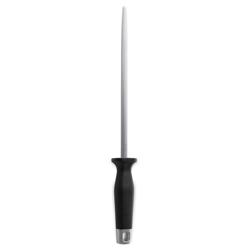
A 10" black sharpening steel made of tungsten carbide that maintains the razor-sharp edges of knives.
Pros: effectiveness, ease of use, great honing tool
-
(1)
A 10" magnetized sharpening steel by Viking for keeping knives sharp and performing their best.
Pros: improves sharp edge, sharpens knives well, nice heft
-
(11)
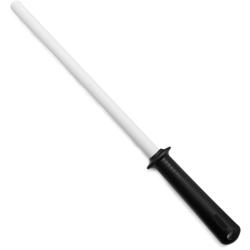
A highly efficient and easy-to-use ceramic sharpening steel with a ribbed surface for re-sharpening and a smooth surface for honing.
Pros: effectiveness, effective sharpening, ease of use
-
(1)
A 9" honing rod with smooth and micro-ribbed surfaces for maintaining razor-sharp Shun cutlery blades.
Pros: excellent for daily use, light weight
-
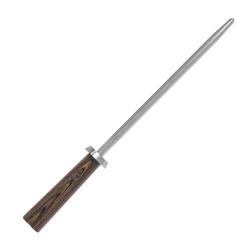
A silver steel honing tool that realigns straight-edged Western and German-style kitchen knives between sharpenings.
-
(7)
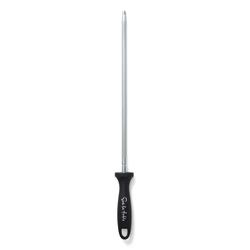
A 10" steel knife maintenance tool to keep your kitchen knives sharp and in good condition.
Pros: effectiveness, easy to use, nice feel
Sharpening Steel
The right sharpener can make a huge difference in the quality of your knives, and it's one of the most important tools in your kitchen. Sharpening steel is a popular choice for knife sharpening. They are easy to use, require no special technique, and can help keep your knives in top condition. Here are some great options.
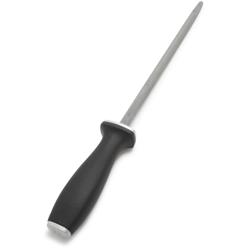
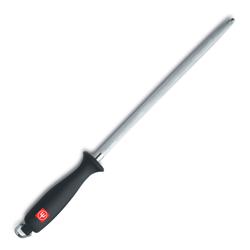
Sharpening Steel
FAQ List
A sharpening steel is a long, thin rod made of hard steel or ceramic material that is used to hone the edge of a knife.
Using a sharpening steel can help to keep kitchen knives sharp and in top condition, making food preparation easier and safer.
It's recommended to use a sharpening steel regularly, ideally before or after each use of your knives.
When choosing a sharpening steel, consider the type of knives you own and use, the length of the steel, and the material it is made of.
Sharpening steel can be used on a variety of knives, but it's important to choose one that is appropriate for the type of knives you own and use.

-
"We love the variety, and the bread knife is just the cherry on top"
-
"Whet stoning will give you the best possible blade but this is a good alternative"
-
"I treat my knives like my children... only the best for them"
-
"Great backup tool"
-
"Great backup tool"