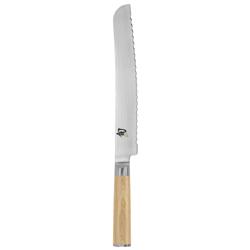
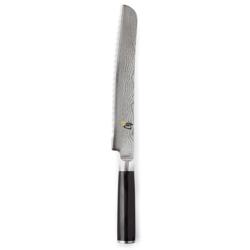
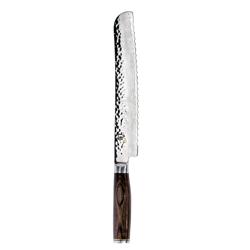
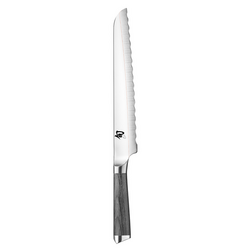
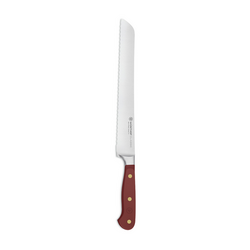
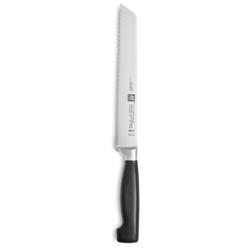
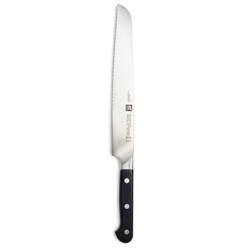
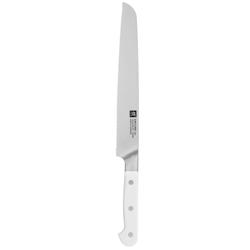
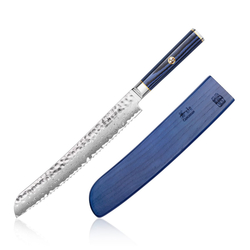
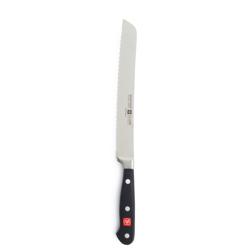
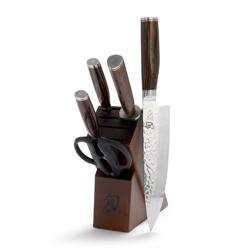
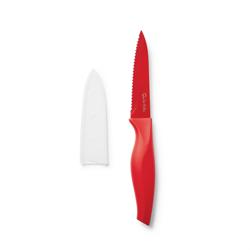
A Japanese-style bread knife combines a sharp serrated edge with the reach to slice through a loaf without pressing it flat. The teeth catch the crust, while the curved sections between them continue the cut through the softer interior. Broad, widely spaced serrations can be especially useful for breads with a firm exterior and an airy crumb, where a blunt blade might skid across the surface or compress the slice. That balance matters whether breakfast means a neatly cut piece of sourdough, a soft sandwich loaf or a brioche destined for French toast. A controlled sawing motion lets the edge do the work, helping preserve the open texture of rustic bread and the tender structure of enriched dough. Some crumbs are inevitable, particularly with a crackly crust, but a sharp, well-suited blade can make slicing cleaner and more predictable. Bread knives also earn their place beyond the bread basket. Their serrations can work through the skin of a ripe tomato, divide a filled sandwich without pushing out its contents and portion certain cakes or pastries with less compression. The best fit depends on the foods prepared most often: a broad country loaf calls for reach, while rolls and smaller sandwich loaves may feel more manageable with a shorter blade. For anyone who bakes regularly, buys whole loaves from a bakery or prepares sandwiches for a household, a dedicated bread knife fills a different role from a straight-edged chef’s knife. It is built for surfaces that resist the first cut and interiors that need a lighter touch. Even thickness becomes easier to maintain when the blade can travel smoothly through the food, making it simpler to cut sturdy toast, slim slices for a cheese board or matching pieces for sandwiches. That everyday usefulness makes the category worth considering alongside the other knives used most often, rather than treating a bread knife as a tool reserved only for occasional baking.
Blade construction influences how a bread knife feels, holds its edge and responds to care. High-carbon stainless steel is common in Japanese cutlery because it can support a fine cutting edge while offering resistance to corrosion, though stainless does not mean rustproof. Some blades use a hard steel cutting core with outer layers of another steel; others use a different construction, so material details are worth comparing rather than assuming that similar-looking knives perform identically. Patterned cladding and hammered finishes contribute to appearance, but the cutting steel, blade geometry and serration design matter more to the work of slicing. A thin blade can move through bread with little resistance, while sufficient stiffness helps maintain control across a wide loaf. Length is equally practical. A blade that extends comfortably beyond the bread leaves room for a longer stroke, reducing the need for repeated short movements. For a more compact length, the
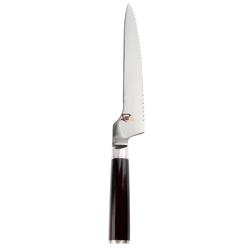
8 Inch Bread Knife category provides a useful point of comparison against the loaves and cutting boards used most often. Handle fit deserves as much attention as blade length. A rounded, contoured or asymmetrical handle may sit differently in the hand, and comfort depends on grip, hand size and whether the knife will be used right- or left-handed. An asymmetrical shape should not be assumed to suit both hands equally. Resin-treated wood handles offer the appearance of wood with added moisture resistance, while synthetic handles provide another option for a practical working grip. Neither material removes the need for careful washing and drying. Straight and offset profiles also change the experience at the board. An offset handle raises the hand relative to the cutting edge, creating more knuckle clearance as the blade reaches the bottom of a slice. A conventional profile may feel more familiar and fit existing knife storage more easily. The most useful choice is the one that balances reach, clearance and a secure grip without feeling awkward during repeated cuts.
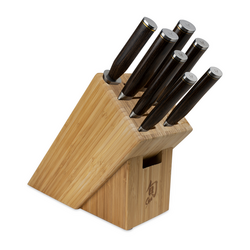
Thoughtful care helps preserve both the cutting edge and the handle over years of regular use. Bread knives are best hand-washed with mild dish soap, rinsed and dried promptly rather than left soaking or placed in the dishwasher. Prolonged moisture, strong detergents and contact with other utensils can damage materials or dull the edge. A wood or suitable plastic cutting board provides a more forgiving working surface than glass, stone or ceramic, which can be hard on fine cutting edges. The serrations are intended for slicing, not for prying apart frozen food, cutting bones or twisting through a resistant object. Those tasks can put sideways stress on the teeth and increase the risk of damage. Safe storage matters, too: a properly fitted blade guard, knife block or secure storage system keeps the edge from knocking against other tools and protects hands reaching into a drawer. Serrated edges require a different sharpening approach from straight edges, and an ordinary pull-through sharpener may not suit their shape. Manufacturer care instructions or a sharpening professional familiar with serrated Japanese cutlery can help determine the right maintenance method. Good technique also makes daily use more satisfying. A fully cooled homemade loaf generally slices more neatly than one cut straight from the oven, and a stable board gives a long blade room to move without crowding the work area. For frequent bakers, that combination of a suitable knife and an uncluttered surface makes portioning a loaf feel less like the final obstacle after baking. For busy households, it supports quick breakfasts, packed lunches and sandwiches cut cleanly in half. As a gift, a bread knife suits someone who enjoys baking, visits a favorite bakery or is building a useful collection of kitchen essentials. Handle comfort, storage space and the recipient’s usual bread choices are more meaningful considerations than decorative detail alone. A thoughtfully chosen serrated knife brings its value to ordinary meals, from the first slice of toast to the last piece shared at the table.