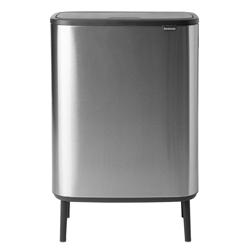
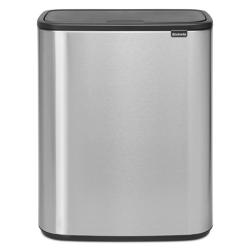
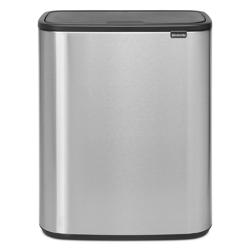
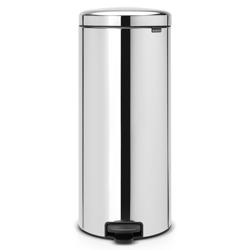
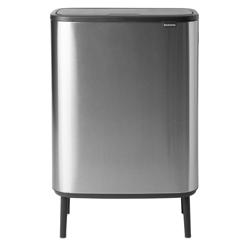
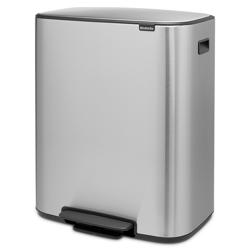
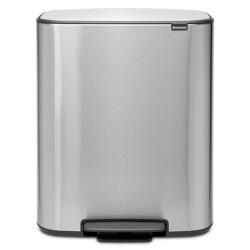
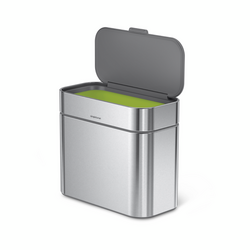
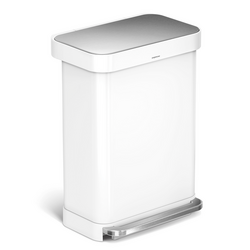
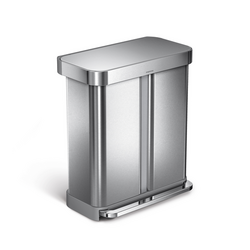
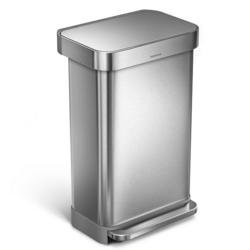
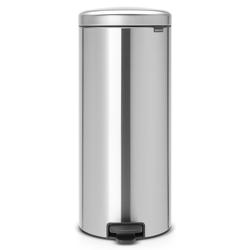
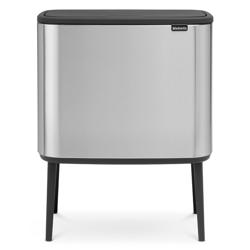
Silver garbage cans range from compact bathroom and office wastebaskets to larger kitchen trash cans with step pedals, soft-close lids or motion sensors. A two- to five-gallon wastebasket can handle tissues, tags and paper scraps without crowding a bathroom vanity or taking up much legroom under a desk. A 13-gallon can is a common choice for the kitchen, with more room for food packaging, vegetable trimmings and the trash that builds up when several people share a space. Capacity tells you how much the can holds, but the shape determines how well it fits. A slim rectangular can can sit along the end of an island or tuck between a cabinet and the wall, while a round wastebasket often fits neatly beside a freestanding vanity. In a galley kitchen, it helps to picture someone standing at the counter with the lid open while another person walks past. A can that fits against the wall may still take up more of the aisle than expected once there’s a foot on the pedal. If the spot is under a counter or beside a drawer, measure the height with the lid fully open and check that nearby doors and drawers can swing or slide freely. And if you plan to tuck a small can inside a cabinet, make sure there’s enough room to reach the rim, whether you’re dropping in a scrap or changing the liner. Placement matters as much as size: Keeping a kitchen can near the prep area saves the walk across the room with a cutting board full of onion skins, while a small bin in the laundry room gives lint, loose threads and empty dryer sheet boxes a place to go. A slim can is especially useful where floor space is tight, but a wider opening may be a better fit if you often scrape dinner plates straight into it.
An open-top silver wastebasket makes sense for dry waste in a home office, where you might toss envelopes or the occasional crumpled note. Mesh works well for paper, while a solid-sided bin is easier to wipe out if it collects dust or sticky wrappers. In the kitchen, a lid keeps scraps out of sight and can help contain everyday odors between bag changes. A step can opens without having to touch the lid, which is useful when both hands are holding a plate or covered in flour. A foot pedal also gives you control over exactly when the lid opens. The
Modern Silver Step Cans collection focuses on that familiar foot-operated design in a silver finish. A soft-close lid is a welcome detail in a kitchen that opens onto a living room, where the sound of a lid dropping carries farther than you might expect. A motion-sensor lid offers another hands-free option. It’s worth thinking about where the sensor will face in a busy walkway, as well as how the lid is powered. The way a can holds its liner matters just as much as how the lid opens. A liner that slips down when something heavy lands in it means more cleanup, while a retaining rim or ring can help keep the bag in place and tuck excess plastic out of view. Check the recommended bag dimensions, not just the gallon count, since a tall, narrow can and a short, wide one can take differently shaped bags even when their capacities match. A removable inner bucket is helpful if a liner leaks: You can lift it out and wash it without moving the whole can. If trash and recycling share a spot, a divided can keeps both streams in one footprint. Look at the capacity of each compartment rather than the total, especially if bottles and bulky cartons tend to fill the recycling side before the trash is ready to go out.
Silver describes the color or finish, not necessarily the material. Stainless steel is a common choice for kitchen trash cans because it holds up well to daily use and wipes clean, while a silver finish on plastic can give a smaller wastebasket a similar look at a lighter weight. Brushed metal has a softer sheen that pairs easily with stainless steel appliances and tends to make smudges less noticeable than a highly polished surface. A shinier finish reflects more light, but fingerprints may be easier to see around the lid and rim. Some cans have a fingerprint-resistant finish, a detail that’s especially useful in a busy kitchen where the can sits in full view. Durability comes down to more than the exterior. A stable base helps keep a step can from shifting on tile when the pedal is pressed, and a sturdy hinge is worth considering in a household that opens the lid throughout the day. For routine care, follow the manufacturer’s directions. A soft, damp cloth is often enough for marks on the outside, and wiping brushed stainless steel in the direction of the grain helps keep the finish looking even. Dry the surface afterward to reduce water spots, and skip abrasive pads unless the care instructions say otherwise. If a bag tears, pay particular attention to the underside of the lid and the rim, where residue can linger after the liner is gone. A removable bucket is usually simpler to clean at the sink, while a sensor housing or pedal mechanism should be cleaned as directed rather than soaked. A silver garbage can can also make a practical housewarming gift for someone furnishing a first apartment or setting up a home office, especially if you know the space they have in mind. A compact wastebasket is easier to place when you don’t know the room’s measurements. For a shared kitchen, knowing where the can will sit and what kind of trash it will collect makes the difference between a tidy fit and one more thing to step around.