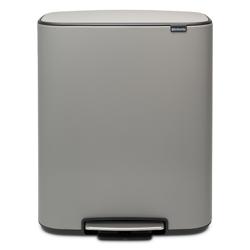
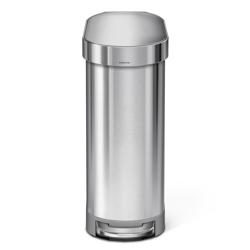
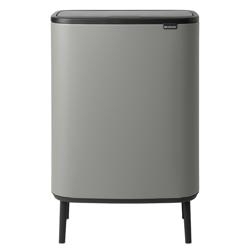
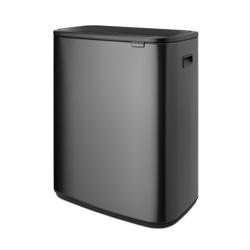
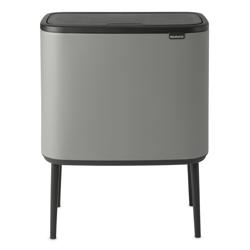
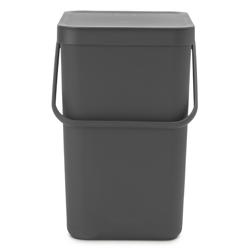
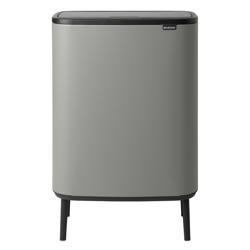
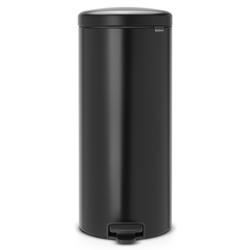
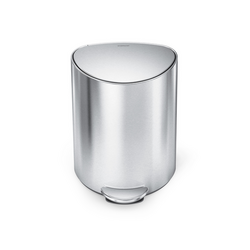
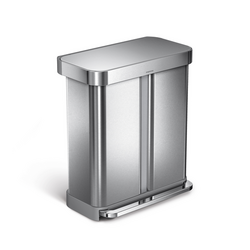
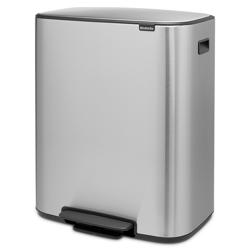
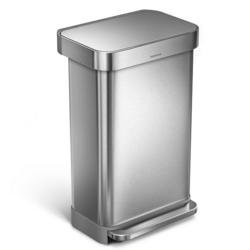
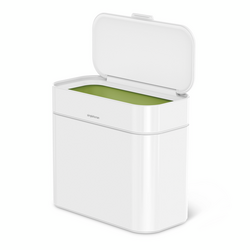
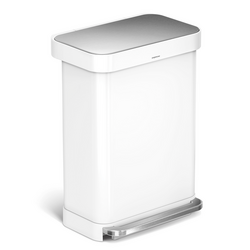
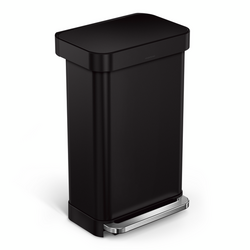
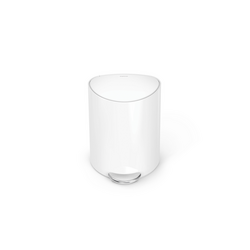
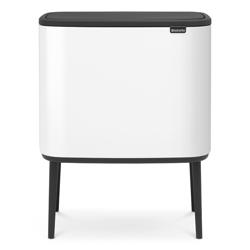
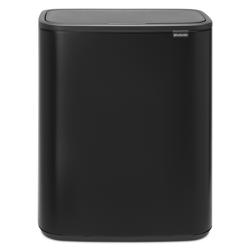
Sleek gray kitchen trash cans pair a neutral finish with practical waste storage for everyday cooking and cleanup. Slim profiles, covered lids and features such as pedal operation or soft-close lids help keep a hardworking kitchen looking orderly. Gray fits comfortably alongside white cabinets, natural wood, stone countertops and stainless steel appliances without demanding that every finish match. A pale gray can soften the contrast in a bright kitchen, while charcoal brings a more defined outline to a space with darker hardware or flooring. Matte surfaces offer an understated look, and metallic accents can connect the trash can visually with nearby appliances. Shape matters just as much as color: a rectangular profile can sit neatly beside the end of a cabinet, while a narrow design may suit the space between a pantry and an island. Rounded shapes have a softer appearance when the can stands in view rather than inside a cabinet. The best fit leaves room for the lid to open fully and for someone to walk past while another person is clearing dishes. Capacity should reflect how the kitchen is used, not simply how much floor space is open. A household that cooks most meals at home may appreciate more room for packaging and everyday waste, while a smaller household may prefer a compact can that gets emptied more often. Capacities around 10 to 13 gallons are common for kitchen use, but the dimensions and liner requirements still matter. Two cans with similar capacities can have very different footprints, heights and openings. Bag fit also depends on the shape of the rim and the manufacturer’s recommendations, so a gallon measurement alone does not guarantee a secure fit. For an apartment kitchen, a shared family space or an open-plan room where the trash can stays visible, a gray finish makes this everyday necessity easier to work into the room’s overall look.
Daily convenience often comes down to how the lid opens, how the liner stays in place and how easily a full bag lifts out. Pedal-operated designs let someone discard vegetable trimmings or food packaging without using a hand to lift the lid, a useful detail when both hands are occupied during meal preparation. For a closer look at that style,
Stylish Gray Step Trash Cans focuses on the same neutral palette with foot-operated access. A soft-close mechanism lowers the lid gently rather than letting it drop, which can make repeated trips to the trash less disruptive in a kitchen that opens onto a living or dining area. Swing lids offer a different kind of access, though the moving flap takes up some room at the opening and may need frequent wiping where waste touches it. Sensor-operated lids can reduce the need to touch the can, but they also require attention to power needs and placement so nearby movement does not trigger unwanted opening. A lid that stays open can be helpful while clearing a cutting board or gathering scraps after dinner; secure closure matters once the task is done. Covered designs keep discarded packaging out of sight and can help contain odors, although no lid replaces regular emptying and cleaning. Households with curious pets may also value a locking feature, while recognizing that a standard closed lid is not necessarily pet-resistant. Inside the can, a removable bucket or liner-retaining rim can make bag changes tidier and help prevent a liner from slipping down under the weight of waste. A broad opening gives bulky packaging more clearance, and a smooth interior presents fewer places for a bag to catch during removal. These details become especially noticeable when the bag is full and there is little room to maneuver beside a cabinet. A stable base, comfortable pedal position and unobstructed lid movement all contribute to a can that feels easy to use throughout the day.
Materials and construction influence how a gray kitchen trash can holds up to splashes, frequent wiping and repeated opening. Stainless steel offers a rigid body and a familiar companion to kitchen appliances, though resistance to fingerprints depends on the surface treatment rather than the material alone. Coated steel can provide an even gray finish, with care needed to avoid abrasive pads that may scratch or wear the coating. Plastic is generally lighter to move and can be convenient when the can needs regular washing, but its resistance to staining, scratches and lingering odors varies with construction and use. A sturdy pedal connection, well-supported lid and secure removable parts deserve as much attention as the exterior finish because those are the components handled most often. Care should follow the manufacturer’s directions, particularly for coated surfaces, electronic components and removable buckets. For routine cleanup, a soft cloth and mild soap are often suitable; harsh cleaners and abrasive scrubbers can damage finishes. Spills beneath the liner need prompt attention, and washed components should dry completely before a fresh bag goes in. Bagged food waste still benefits from frequent removal, especially after preparing fish, trimming meat or clearing strongly scented leftovers. Placement helps, too: keeping the can within easy reach of the prep area reduces trips across the kitchen, while leaving it out of the main walkway makes shared cooking more comfortable. A separate spot for recycling keeps cans, jars and cardboard from filling the trash unnecessarily, and a dedicated compost container can keep suitable food scraps separate. The trash can then serves a clear purpose rather than becoming the destination for everything cleared from the counter. For someone setting up a first kitchen, reorganizing a busy family kitchen or refining a compact cooking space, a sleek gray trash can brings useful function without adding visual clutter. The right balance of size, access and easy care makes it a practical part of the kitchen, whether tucked beside cabinetry or standing neatly in view.