
-
(228)
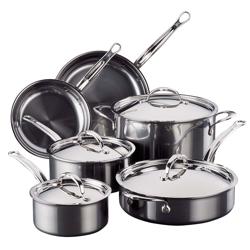
A 10-piece cookware set with innovative Molecular Titanium technology for exceptional performance and durability.
-
(56)
A silver 3-ply cookware set featuring a titanium nonstick surface and ergonomic stainless steel handles.
-
(12)
A 9-piece nonstick cookware set with a patented ceramic titanium surface, suitable for all cooking surfaces.
-
(55)
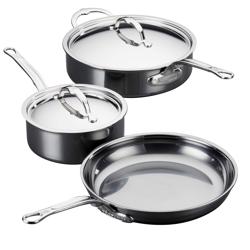
A 5-piece cookware set with Hestan's Molecular Titanium technology for a resilient, toxin-free cooking surface.
-
(293)
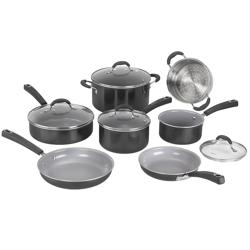
A 11-piece cookware set with ceramic nonstick coating, aluminum core, and comfortable silicone handles.
-
(11)
A professional-grade nonstick cookware set with a ceramic titanium surface for healthy cooking and easy cleaning.
-
(1)
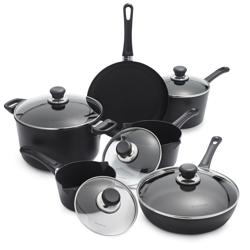
A sleek black ceramic nonstick cookware set featuring cold-forged aluminum and tempered glass lids for easy cooking.
-
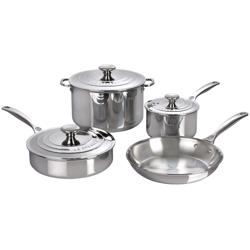
A 7-piece stainless steel cookware set with a triple-layer construction for superior heat distribution.
-
A 12-piece stainless steel cookware set with superior heat distribution, laser-etched capacity markings, and iconic three-ring lid.
-
A six-piece stainless steel cookware set with triple-layer construction and titanium-reinforced silver exterior.
Titanium Cookware Sets
Titanium cookware sets bring coordinated pots and pans together for everyday meals, whether you’re outfitting a new kitchen or refreshing your cookware collection. Compare the included shapes, cooking surfaces and care requirements to find a set that suits your favorite recipes and cooking routine.





Best Of FAQ
Not necessarily. Titanium-based cookware may combine titanium with stainless steel, aluminum or a ceramic nonstick coating. Titanium can be used at the cooking surface or in the exterior, so check the construction details for each set.
Yes. A coordinated set can include pieces with different cooking surfaces. Review the description of each pot and pan rather than assuming every piece has the same coated or uncoated interior.
Start with the dishes you cook regularly. Skillets suit frying and sautéing, saucepans are useful for sauces and grains, and stockpots accommodate soups and pasta. Choose a combination that complements the cookware you already reach for.
Consider the recipient’s cooking habits, kitchen setup and preference for coated or uncoated cookware. Compare the set’s contents with what they already own, and review cooktop compatibility and care instructions before choosing.
Follow the manufacturer’s cleaning instructions for each piece, including lids. Check whether hand-washing is recommended and which cleaning tools are appropriate. Different surfaces within the same set may have different care requirements.
-
"Love this cookware. I bought a skillet and the saute pann with metal lid"
-
"Best pot. Easy clean and no stain. It is not cheap but great quality"
-
"These are the best. they heat up fast. Cooking is a pleasure with them"
-
"He helped me decide the best options and avoid duplicate sizes which saved me a few hundreds"
-
"Nothing sticks to it, and everything that I've made in it so far has turned out great"


