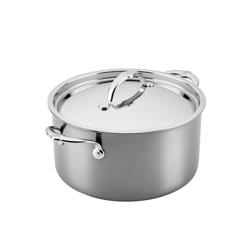
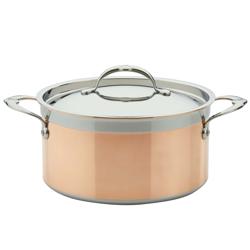
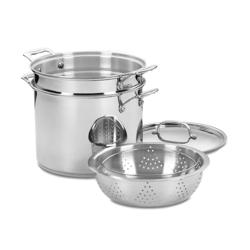
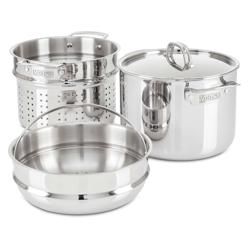
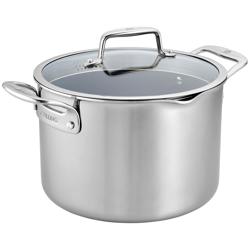
Titanium stockpots give cooks room for the meals that need more than a saucepan: broth simmered with chicken bones and aromatics, a generous batch of tomato soup or enough pasta to bring everyone to the table. Their appeal starts with capacity, but the material and construction deserve just as much attention. Titanium is known for its strength relative to its weight and its resistance to corrosion, though the term “titanium” does not describe one uniform type of cookware. A stockpot may be made primarily from titanium, feature a titanium-reinforced nonstick coating or incorporate titanium into another cooking surface. Each approach creates a different cooking experience, so the full material description matters more than the name alone. A reinforced nonstick interior can make it easier to release thick soups and clean away starchy residue, while an uncoated cooking surface may better suit cooks who want to develop browned flavor before adding liquid, provided the manufacturer recommends that use. Heat distribution depends on the complete construction, including the body, base and any conductive layers. Titanium alone does not guarantee even heating, and an aluminum core or base can play an important role in moving heat across the bottom of a pot. These details become especially noticeable with foods that settle as they cook, such as split pea soup, beans or a thick vegetable purée. A well-matched stockpot supports the way a household actually eats, whether that means preparing several lunches at once or making a slow-simmered broth for the freezer. The tall sides of a traditional stockpot help hold a substantial volume of liquid without taking up the same burner space as a very wide vessel. That shape is useful for submerging ingredients, although a broader base may be more comfortable for stirring dense mixtures or sautéing vegetables first. Neither shape is best for every kitchen; the right balance comes from the dishes that return to the stove most often.
Capacity is only one part of finding a titanium stockpot that feels comfortable in daily use. A household that regularly cooks a pound of pasta needs room for water to circulate and space above the liquid to help manage bubbling. Someone making broth from a whole chicken needs enough depth to cover the ingredients without filling the pot to the rim. Larger batches also mean more weight once water and food are added, even when the empty cookware feels relatively light. For that reason, handle shape, grip clearance and balance deserve a close look. Two secure side handles should allow a confident hold with dry oven mitts, and the pot should feel manageable along the route from stove to sink. Overall dimensions matter here: handles can extend well beyond the cooking vessel, and a tall pot may fit on the burner but feel awkward beneath a low hood or faucet. Storage space and sink depth are practical considerations, too, especially for cookware that needs to be washed by hand. The lid changes the experience in smaller but useful ways. A close-fitting lid helps retain moisture during a gentle simmer, while a glass lid allows a view inside without lifting it, though steam can obscure that view. Lid knobs and handles may have different heat limits from the pot itself. Cooktop compatibility also comes from the finished construction rather than titanium content alone. Induction requires a compatible magnetic base, and a flat bottom helps establish good contact on smooth cooking surfaces. A base that suits the burner’s size supports more effective heating, while an oversized pot on a small burner can take longer to bring to a boil. Oven use, dishwasher care and maximum heat tolerance should all be confirmed in the manufacturer’s instructions. These are the details that make the difference between a pot that simply holds enough and one that works comfortably through cooking, serving and cleanup.
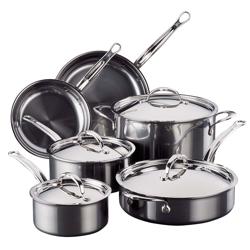
Durability in titanium cookware is best understood as a combination of material, construction and everyday care. Titanium’s strength does not make every titanium cooking surface scratchproof, and reinforcement does not remove the care requirements of a nonstick coating. Wood, silicone or other manufacturer-approved utensils are sensible companions for coated interiors, particularly when stirring along the bottom or serving the last portion of a thick stew. Moderate heat is often enough for simmering once a pot has come up to temperature, and an empty coated pot should not be left heating unattended. Uncoated interiors have their own care needs, so abrasive pads and strong cleaners are best reserved for surfaces whose instructions specifically permit them. Letting cookware cool before washing helps avoid abrupt temperature changes, while a soak in warm, soapy water can loosen dried starch and soup residue without forceful scrubbing. Careful drying and a protective layer between nested pieces can help preserve the finish during storage. With those habits, a stockpot can become a dependable part of a cooking routine rather than something brought out only for unusually large meals. It can handle the beans destined for several dinners, the broth portioned into freezer containers or the soup shared with a friend. For cooks building a coordinated collection,
Titanium Cookware Sets provide another way to explore the material across everyday cooking tasks, with attention to each set’s contents and construction. A stockpot also makes a thoughtful gift for someone who enjoys cooking for a group or preparing meals ahead, especially when its size suits their kitchen rather than simply being the largest option. The most useful choice leaves enough room for familiar recipes, feels secure when full and comes with care requirements that fit the recipient’s habits. Those practical qualities give titanium stockpots their lasting place beside the stove: generous cooking space, construction suited to the task and the ability to take a batch from its first aromatic ingredients to its final ladleful.