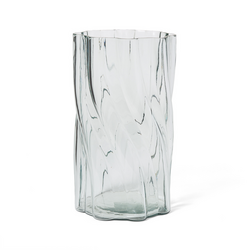
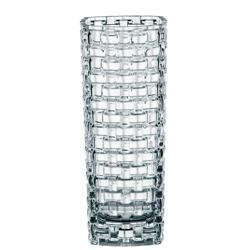
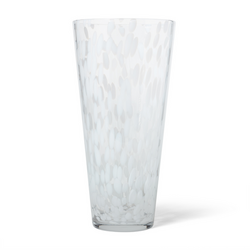
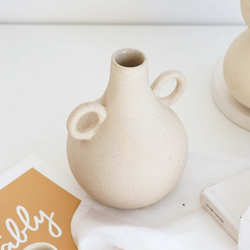
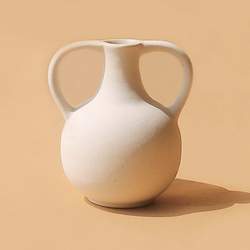
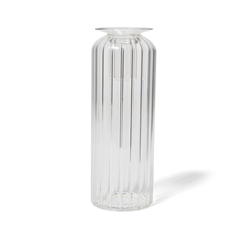
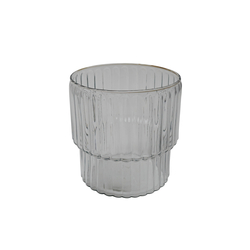
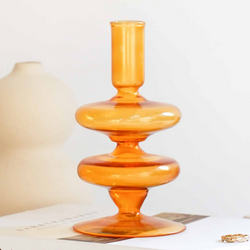
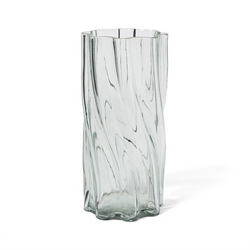
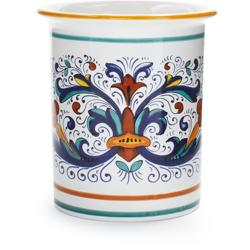
Vases for home decor are decorative vessels that add shape, color and texture to a room, whether they hold fresh flowers, dried stems or nothing at all. Glass, ceramic, metal and stone each bring a different character to a display, while a vase’s height, opening and base help determine where it fits and what it can hold. A clear glass vase lets the stems become part of the arrangement; an opaque vessel keeps the focus on the flowers and the shape beneath them. On a dining table, a low, rounded silhouette can hold a loose gathering of blooms without interrupting conversation across the table. On an entryway console, a taller vase gives a few branches room to spread and helps anchor the space beside a tray for keys. A small vase tucked onto a bookshelf can soften a row of books without crowding the shelf. The best fit depends as much on the surrounding space as on the vessel itself. Leave enough clearance beneath shelves for both the vase and its contents, and consider the full spread of an arrangement rather than just the width of the base. For a table used every day, a manageable size makes it easier to move flowers aside when dinner is ready. Shape matters, too: a narrow neck gathers a few stems into a tidy arrangement, while a wider opening allows flowers to fan out and may need a fuller bunch for balance. A broad, steady base is especially useful for taller stems. Color can connect a vase to nearby dinnerware, upholstery or artwork without matching every detail. Soft neutrals let flowers take the lead, while a richer color can stand on its own against a simple wall. Grouping a few vessels with different heights creates an easy focal point, especially when they share a color or material. Leaving some open space around them keeps the display from feeling crowded and gives each shape room to be appreciated.
Material influences both the look of a decorative vase and how it works in daily use. Glass has a light, open appearance that suits a kitchen counter, breakfast table or windowsill, and its transparency makes the water level easy to see. It also reveals cloudy water and residue, so regular cleaning helps preserve that clear appearance. Ceramic offers a wide range of surfaces, from smooth, glossy glazes to more textured finishes. Its visual weight can make a small arrangement feel substantial, while an understated ceramic shape can be appealing even without flowers. Not every ceramic vase is intended to hold water, however; an unglazed interior, porous clay or certain decorative finishes may call for dried stems or a separate watertight insert. Metal brings a different kind of contrast, with polished surfaces reflecting light and brushed or aged finishes lending a quieter look. Water compatibility varies by metal, coating and construction, so the care information should confirm whether fresh arrangements are appropriate. Stone can introduce natural variation in color and pattern, along with substantial weight, but some stone surfaces are porous or sensitive to acidic cleaners. For any material, a vessel intended for fresh flowers should be watertight and stable when filled. Dry arrangements place fewer demands on water resistance, though tall branches still need a base that will keep them balanced. Consider the surface beneath the vase as well. A smooth underside or a protective pad can help prevent scratches on a wood console or dining table, and moisture should not be left sitting against a delicate finish. Durability is not simply a matter of choosing the heaviest material. A thick base may provide stability, but a delicate rim can still chip; metal may resist breaking but dent if dropped. In a busy household, a sturdy shape placed away from an edge is often more practical than a tall, narrow vessel along a frequently used walkway. These details help make a vase comfortable to live with, not just attractive in a photograph.
A vase that is easy to fill, carry and clean is more likely to become part of everyday decorating. A generous opening usually makes hand-washing simpler, while a narrow neck may require a soft bottle brush to reach the interior. Follow the care instructions for the material and finish, and do not assume a decorative vase is dishwasher safe. For washable vessels, mild dish soap, warm water and a gentle rinse are often a sensible starting point; abrasive pads can scratch glass or damage a glazed or painted surface. Empty fresh flower water regularly, remove leaves that would sit below the waterline and clean away residue before adding another arrangement. Dry the exterior and base before returning the vase to furniture. For vases used with dried stems, occasional dusting helps keep textured surfaces and narrow openings looking tidy without unnecessary soaking. Intended use can also shape a thoughtful gift. Someone who enjoys arranging flowers may appreciate an opening that accommodates a mixed bouquet and a vessel that is straightforward to clean. A host who often sets a dining table may prefer a lower silhouette that leaves room for serving dishes and clear sightlines between guests. For a housewarming or wedding gift, a versatile shape in a familiar material can work in several rooms as the recipient settles into a space. A vase also makes a considered thank-you gift when its scale suits the recipient’s home, whether that means a compact accent for an apartment or a more substantial piece for an entry table. Explore
Decorative Vases with the room, preferred material and intended use in mind. A useful choice does not need an elaborate arrangement to feel complete: a few stems beside a favorite serving bowl, a sculptural shape on a mantel or a simple bouquet at the center of the table can be enough. The right proportions and finish let the vase complement the home while leaving room for the flowers, objects and everyday moments around it.