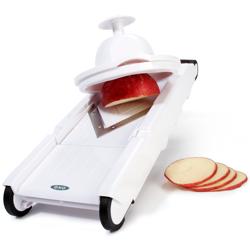
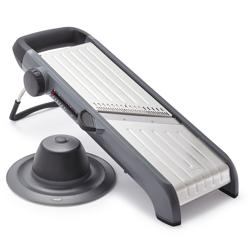
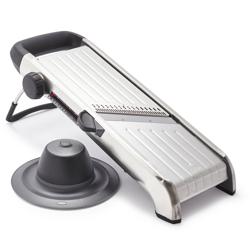
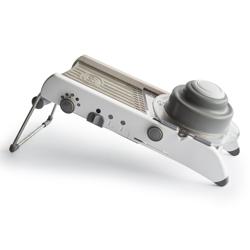
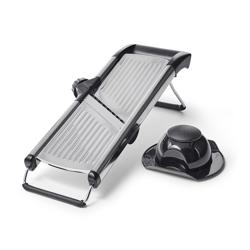
Crinkle-cut mandolines for potato chips use a wavy blade to create ridged potato slices, with thickness settings that vary by design. For homemade chips, the important combination is a crinkle blade and a setting thin enough for the style of chip you want to make. Those rippled slices bring a familiar texture to a bowl of salted chips, a sandwich plate or a spread of dips for game night. A mandoline holds its blade in a slicing platform, helping produce repeated cuts at a consistent thickness as the potato moves across it. That makes it different from a handheld crinkle cutter, which has a wavy blade pressed down through the potato and relies more on the cook to control the thickness of each slice. Both create ridges, but they serve different preparation styles. A mandoline is especially useful when a batch calls for many similar slices rather than a few thick, decorative cuts. The crinkle attachment matters, too: a straight slicing blade makes smooth slices, while a julienne attachment produces strips rather than waves. Some designs have interchangeable blades, while others use a built-in blade selector. A waffle-cut capability is a separate consideration and should not be assumed simply because a slicer makes crinkle cuts. For chips, an adjustable slicing thickness gives the cook more control over the finished texture, from delicate slices to sturdier pieces with a more substantial bite. Very thin settings are not necessarily compatible with every wavy blade, so the stated cutting range is more useful than the number of settings alone. Consistent slices help a batch cook more evenly, although potato variety, surface moisture and cooking method still affect the result. Starchy russet potatoes are a familiar choice for crisp chips, while yellow potatoes bring a different flavor and texture. Whether the chips are destined for frying, baking or air frying, the slicer’s role is the same: creating repeatable ridges and thickness without requiring every slice to be measured by eye.
Materials and construction make a noticeable difference when a firm potato meets a sharp blade. Stainless steel is common for cutting edges because it combines strength with corrosion resistance, though blade quality and care matter more than the material name alone. A rigid slicing platform helps keep the chosen thickness consistent under pressure. Bodies may be made from stainless steel, food-safe plastic or a combination of the two, with different trade-offs in weight, grip and ease of handling. A lighter handheld mandoline can suit smaller prep jobs and limited storage, while a supported countertop design may feel steadier for larger batches. Neither format is automatically the better fit; the useful choice depends on where the slicer will sit and how comfortably the cook can control it. A broad platform can accommodate wider potatoes, while a narrower opening may require larger potatoes to be trimmed to fit. Handles, nonslip feet and bowl-resting notches are practical details worth considering together. A slicer resting over a bowl needs a secure fit, and a standing model needs enough clear counter space for its full footprint. The food holder deserves as much attention as the blade. A well-fitting holder grips the potato and keeps fingers away from the cutting edge, particularly as the remaining piece becomes smaller. No design makes exposed blades harmless, and the last small piece is not worth slicing without secure protection. A cut-resistant glove can provide added protection but does not replace the holder or careful handling. Adjustment controls should be easy to understand and secure once set, without requiring fingers to pass near the edge. For kitchens that also handle cucumber rounds, cabbage for slaw or potatoes for gratins, the Best Mandoline Slicer collection can help broaden the comparison beyond crinkle cuts. The
Best Mandoline Slicer page is also a useful starting point for weighing everyday versatility against a more focused preference for ridged slices.
Care and storage are part of choosing a crinkle-cut mandoline, especially because the blade’s grooves and attachment points can catch potato starch. A design with accessible surfaces and removable components may be easier to clean thoroughly, provided those parts can be handled safely. Manufacturer care instructions should determine whether any component belongs in the dishwasher; a dishwasher-safe body does not necessarily mean every blade or attachment can be cleaned the same way. When hand-washing is required, a brush can help clear residue while keeping hands away from the edge. Careful drying before storage helps protect metal parts and prevents moisture from collecting around adjustment mechanisms. Stainless steel resists corrosion, but it is not immune to damage from prolonged dampness or unsuitable cleaning products. Storage deserves similar attention. A blade cover, locking position or dedicated attachment case can help keep sharp edges from becoming exposed in a crowded drawer. Loose blades are difficult to store safely alongside spatulas and measuring spoons, and a large slicer is less convenient if its folded dimensions do not fit the space set aside for it. Long-term usefulness also depends on whether the frame remains stable, the thickness adjustment holds its setting and the blade continues to cut cleanly without excessive force. Replacement-blade compatibility can matter for a tool expected to handle frequent prep. For the cook who regularly makes sandwich lunches, hosts casual gatherings or enjoys preparing snacks from scratch, a crinkle-cut mandoline can earn its place through repeated use. It can also make a thoughtful gift for someone who already enjoys kitchen prep, particularly when its size, safety features and care needs suit that person’s routine. The appeal is practical as much as visual: a bowl of evenly ridged chips, slices sturdy enough for a favorite dip and a tool that makes a familiar preparation more consistent. A comfortable grip, appropriate cutting range and manageable cleanup help turn that appeal into everyday usefulness.