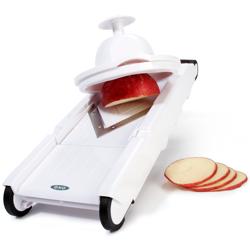
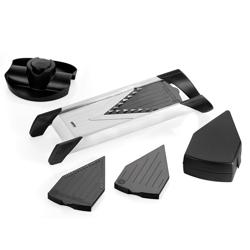
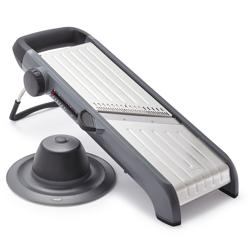
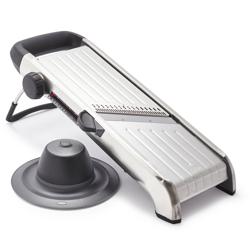
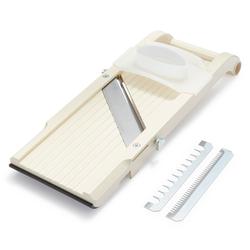
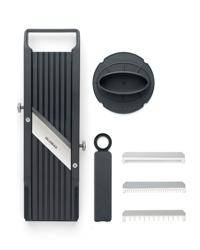
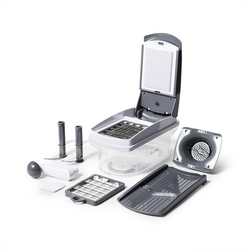
The best mandoline slicer is one that suits the foods you prepare, the space you have and the way you like to cook. For someone who regularly makes cucumber salads, that may mean a compact handheld design that is easy to reach for and put away. For a cook layering potatoes into a gratin or preparing vegetables for a dinner party, a larger cutting surface and a sturdy stand may be more useful. What these tools share is the ability to create repeated, consistent slices without cutting each piece individually with a knife. Thin rounds of radish bring crisp texture to tacos, ribbons of zucchini fold neatly into salads and evenly sliced apples make an attractive arrangement across a tart. Consistent thickness can also help ingredients cook at a similar rate, particularly in dishes where overlapping slices need to soften together. A mandoline is especially useful when texture matters: paper-thin fennel feels delicate in a citrus salad, while a thicker cucumber slice holds its crunch alongside a creamy dip. Straight slicing is the foundation, but some designs also accommodate julienne cuts or other shapes through separate blades or inserts. Narrow strips of carrots can become a crunchy slaw, while matchstick potatoes offer a different starting point for frying or roasting. Those additional functions are worth considering when they reflect meals you already enjoy making, rather than simply adding more pieces to store. A mandoline complements a chef’s knife rather than replacing it; trimming stems, cutting irregular ingredients into manageable portions and handling foods unsuited to a slicing platform still call for other tools. For everyday cooking, its appeal is straightforward: less repetitive knife work and greater control over the thickness of vegetables and firm fruits. Whether preparing two servings or a platter for guests, a slicer that feels stable and manageable is more useful than one with features that rarely leave the cabinet.
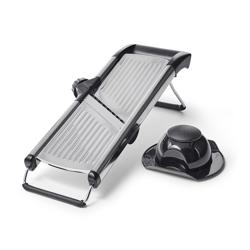
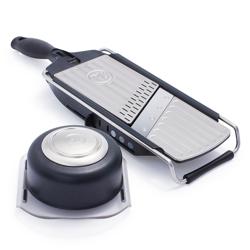
Materials and construction affect how a mandoline feels during use, how easily it cleans up and how well it holds up to repeated preparation. Stainless steel blades are common because they offer corrosion resistance, though they still benefit from prompt cleaning and thorough drying. Some slicers use ceramic blades, which resist rust but can chip if dropped or handled roughly. The frame may be stainless steel, plastic or a combination of materials. A heavier frame can feel substantial on the counter, while a lighter body may be easier to lift, reposition and store. Weight alone does not establish quality; a rigid platform, secure adjustment mechanism and comfortable grip all matter. Look at the relationship between the cutting surface and the foods you prepare most often. A wider platform can better accommodate broad potatoes or cabbage wedges, provided the pieces fit within the tool’s stated limits and work with its food holder. A narrow slicer may suit smaller vegetables without taking up as much drawer space. Thickness adjustment deserves attention, too. An
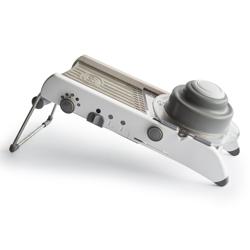
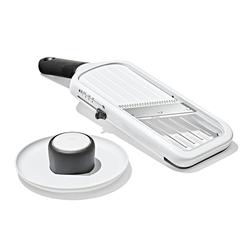
Adjustable Mandoline Slicer allows different slice thicknesses, making it useful for cooks who move between delicate salad ingredients and more substantial slices for baked dishes. Depending on the design, thickness may be controlled by a dial, lever or interchangeable component. Clear markings and a setting that stays securely in place can make repeated results easier to achieve. Blade shape also influences the cutting motion: straight, angled and V-shaped blades engage food differently, although sharpness, ingredient firmness and correct technique all affect performance. Beyond the blade, practical details deserve equal consideration. Nonslip feet, a secure handle and a food holder that grips ingredients effectively contribute to a more controlled setup. Folding stands and covered blades can simplify storage, but the stored dimensions should still suit the drawer or cabinet where the slicer will live. Any loose inserts also need a protected place where their sharp edges will not be exposed.
Comfort and safe handling are central to choosing a mandoline that will earn a regular place in the kitchen. An exposed slicing blade is extremely sharp, so the supplied food holder or pusher should be used as directed every time, with fingers kept away from the cutting edge. A properly fitted cut-resistant glove may provide an additional layer of protection, but it does not replace the guard or make contact with the blade safe. A stable work surface, an unhurried pace and stopping before the remaining piece becomes too small to hold securely all matter more than getting one last slice. For someone new to mandolines, straightforward assembly and an easy-to-understand adjustment system can be more valuable than numerous cutting options. Experienced cooks may appreciate a broader range of settings, especially when preparing larger quantities of produce. Care requirements are another part of the fit. Food can collect around blades, grooves and adjustment mechanisms, so accessible surfaces and components designed for cleaning can make maintenance less awkward. Follow the manufacturer’s instructions for disassembly and washing; dishwasher suitability varies, and a dishwasher-safe frame does not necessarily mean every component belongs in the machine. When hand-washing is required, a suitable brush can help remove residue without bringing fingers near the edge. Thorough drying before storage helps protect metal components, while a blade cover or dedicated storage case keeps sharp parts separated from other utensils. Over time, replacement blade availability may matter for designs with serviceable parts, particularly with frequent use. As a gift, a mandoline makes sense for someone who enjoys vegetable-forward meals, composed salads, gratins or detailed food preparation and is comfortable using sharp kitchen tools. The most thoughtful choice accounts for that person’s kitchen space and cooking habits. A compact slicer can suit a small kitchen beautifully, while a larger model may better serve someone who routinely prepares generous batches. Lasting usefulness comes from a balance of clean cuts, comfortable handling and care that fits into everyday routines.