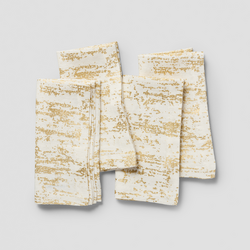
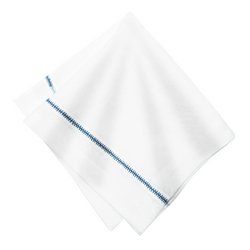
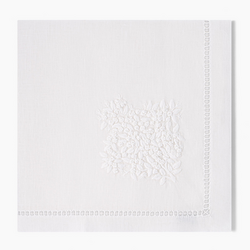
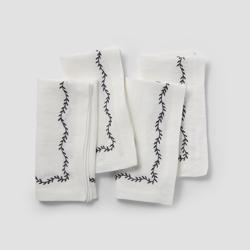
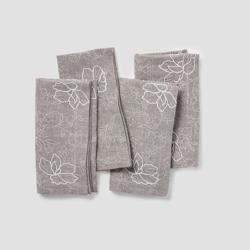
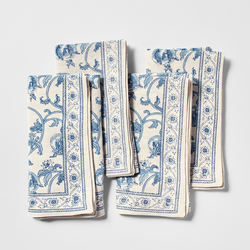
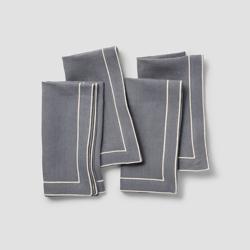
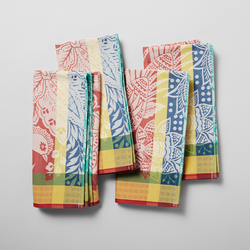
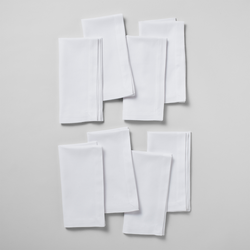
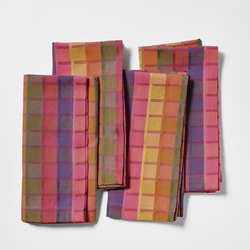
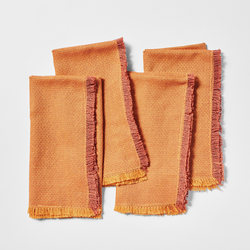
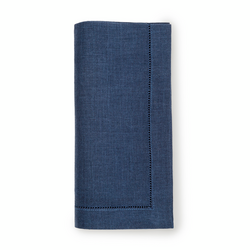
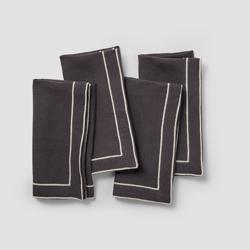
Embroidered napkins bring stitched texture and decorative detail to modern table settings without requiring elaborate place settings. Simple geometric patterns, tone-on-tone stitching and restrained botanical motifs complement contemporary dinnerware while giving the table a more personal feel. Unlike a printed design, embroidery adds dimension through threads worked into the fabric, creating a detail that can be subtle from across the room and more noticeable up close. That balance suits homes where the dining table serves many purposes, from a quiet breakfast spot to a place for gathering friends over dinner. A clean-lined room does not need an entirely plain table; a small embroidered leaf, a narrow decorative border or a repeated abstract shape can add interest without competing with the rest of the space. White and ivory provide a versatile foundation, while gray, muted blue and earthy neutrals offer gentle contrast against wood, glass and stone surfaces. More colorful embroidery can pick up a shade already present in a bowl, a piece of artwork or the upholstery around the table. The result feels connected rather than rigidly matched. For a pared-back setting, an embroidered napkin beside a simple plate may be all the decoration needed. For a more layered table, the same kind of detail can sit comfortably alongside textured placemats and clear glassware. Keeping one element quiet helps the stitching stand out: a patterned plate often pairs easily with a restrained napkin, while plain dinnerware leaves room for a more expressive motif. Modern style also makes space for personality. A small floral sprig can soften an angular place setting, and crisp linework can give traditional dishes a more contemporary companion. Embroidered cloth napkins work for everyday meals as well as celebrations, making them useful for people who enjoy setting a welcoming table without making every meal feel formal. Their appeal lies as much in that flexibility as in the decoration itself.
Fabric influences how embroidered napkins look, feel and fit into a household’s routine. Cotton generally offers a soft, absorbent surface and a familiar feel, making it a practical consideration for frequent use. Linen has a more pronounced natural texture and a relaxed drape that works particularly well with modern interiors. Its characteristic creasing can feel right at home beside handmade-looking ceramics or a bare wood tabletop, while pressing gives it a crisper appearance for a more polished setting. Blends vary according to their fiber content, so the fabric label offers a better indication of care needs than appearance alone. For a closer look at this textured material, explore
Embroidered Linen Napkins. The relationship between fabric and stitching matters, too. Fine embroidery on a smooth background creates a different effect from heavier thread on a visibly woven cloth. Tone-on-tone designs emphasize that texture, while contrasting thread makes the pattern easier to see. A comfortable napkin should still feel pleasant in the hand and on the lap, with decoration that suits its intended use. Size is another practical consideration. Dinner napkins commonly measure about 18 to 22 inches square, providing coverage on the lap and enough fabric for a simple fold. Smaller cocktail napkins suit drinks and small bites, though they do not replace the coverage of a dinner napkin during a full meal. Dimensions also affect how a place setting looks: a generously sized napkin can balance a large dinner plate, while a compact fold leaves more room on a small table. The position of the embroidery helps determine which folds show it best. A corner motif remains visible with a straightforward rectangular fold, while a decorative border can frame the edge of a plate. There is no need for complicated folding to make the detail noticeable. An easy fold with the stitched edge facing outward often feels most natural in a modern home, especially when the table is shared with serving bowls and platters.
Care requirements deserve as much attention as color and pattern, particularly when embroidered napkins will be part of everyday dining. Machine-washable fabrics can make regular use more manageable, but the care label should always guide washing temperature, drying and ironing. The base fabric and embroidery thread may respond differently to heat or cleaning products, so a method suited to plain table linen is not automatically right for a decorated napkin. Prompt attention to food marks helps keep them from becoming more difficult to remove, and gentle blotting is preferable to vigorous rubbing over the stitching. Any stain treatment should be compatible with both the fabric and the thread color. Bleach is not appropriate for every white napkin, especially when colored embroidery is involved. If ironing is permitted, pressing from the reverse with a pressing cloth can help protect the raised design. For a more relaxed table, neatly smoothed fabric may be enough; perfectly sharp creases are not essential to an inviting meal. Durability depends on construction as well as care. Secure stitches, finished hems and fabric suited to repeated laundering are useful details to consider for napkins that will see frequent service. Loose threads and open decorative areas may need gentler handling, especially around jewelry or anything that could catch. Storing napkins clean and completely dry helps keep them ready for the next meal, and having enough for the household plus a few guests makes cloth easier to use regularly. Embroidered napkins also make thoughtful gifts for a housewarming, a wedding or a host who enjoys gathering people around the table. A restrained design can suit someone whose decorating preferences are still taking shape, while a familiar color or meaningful motif makes the choice feel more personal. For the recipient, usefulness matters alongside appearance: manageable care, comfortable fabric and a size suited to the way they entertain all help the gift become part of daily life. Whether used with weeknight pasta or a meal shared with friends, embroidered napkins bring a considered finishing touch to the table.