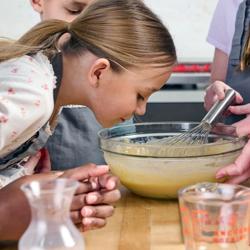
Family chocolate baking classes turn a familiar favorite into an activity that children and adults can share from the first measured ingredient to the final finishing touch. Chocolate gives a baking lesson an inviting starting point: its aroma is recognizable, its flavor is familiar, and its transformation from solid pieces to a glossy mixture is easy to see. For children, those changes can make the kitchen feel like a place to investigate rather than simply wait for dessert. For adults, a class offers time to bake alongside younger family members without having to plan every step or manage the entire lesson. Parents and children, grandparents and grandchildren, and other family groups can enjoy working toward the same delicious goal, with participation shaped by the age requirements and format of the session. A younger baker might concentrate on careful measuring or stirring, while an older child may be ready to follow a sequence, compare textures, or take more responsibility for a mixture. An instructor-led setting gives those different abilities a shared focus. There is room for concentration, conversation, and the occasional uneven swirl that makes a bake feel unmistakably handmade. Beginner-friendly classes are especially appealing when family members have different levels of confidence: someone who regularly bakes at home can work beside someone still learning how to level a measure of flour. The experience also gives adults a chance to step back and let children take ownership of an appropriate task. Reading the next instruction aloud, noticing a change in consistency, or remembering which ingredient comes next can all be meaningful contributions. For a family outing, a birthday activity, or time together with a visiting relative, chocolate baking offers a clear purpose without requiring everyone to have the same interests or experience before arriving. The common ground is the recipe, and each person has a part in helping it come together.
What families learn in a chocolate baking class depends on the menu, but the most useful lessons often involve understanding why a recipe behaves the way it does. Cocoa powder and melted chocolate, for example, do different jobs in a batter. Cocoa powder adds concentrated chocolate flavor and absorbs moisture, while melted chocolate also contributes fat and, depending on the type, sweetness. Seeing how each blends with other ingredients can help explain why two chocolate desserts have very different textures. A class might explore the dense center of a brownie, the tender crumb of a cake, or the contrast between a baked shell and a smooth filling. These are approachable ways to connect technique with a result that younger bakers can recognize. Mixing provides another useful lesson. Stirring ingredients until combined, beating to incorporate air, and folding gently are distinct actions, even if they look similar at first. With an instructor demonstrating the movement and texture, those recipe terms become easier to understand. Chocolate also rewards attention during melting: excessive heat or an unintended splash of water can change its consistency, and watching a demonstration makes that sensitivity more tangible than a written warning alone. Depending on the recipe, participants may also practice portioning evenly, preparing a pan, checking for doneness, or adding a finishing detail. The emphasis is not necessarily on elaborate decoration. A neatly spread layer, evenly sized portions, or a simple drizzle can give children a satisfying way to see the effect of careful work. Waiting has a role, too. Cooling and resting can determine whether a bake slices cleanly, holds its shape, or develops its intended texture. In a family setting, these pauses can become part of the lesson rather than an unexplained delay. Throughout the process, age-appropriate responsibilities matter, particularly around hot pans, melted mixtures, and electrical equipment. A well-matched class lets children contribute meaningfully while adults remain involved in the steps that call for closer supervision.
The right family chocolate baking experience fits both the people attending and the kind of time they want to spend together. Some families are drawn to a familiar dessert that gives newer bakers a comfortable entry point; others enjoy a menu with an unfamiliar technique or a more detailed finish. The listed age range, expected skill level, and adult participation requirements are important distinctions, especially when siblings are at different stages. A session suited to a teenager may move differently from one designed for younger children, and a shared family class is a different experience from a children-only lesson. Ingredient needs deserve similar attention. Chocolate baking commonly involves milk, eggs, wheat, or soy, and some recipes include nuts, so allergy questions and accommodation needs are best discussed before booking rather than assumed from a class title. Beyond those practical considerations, the appeal is often the chance to spend focused time together. A child who usually watches an adult bake can become a collaborator, and an adult who tends to take over at home can enjoy seeing how that child approaches a task with instruction. Families with an interest in doughs, fillings, and layered desserts can also explore
Chocolate Pastry Baking Classes, keeping each session’s age guidelines and skill level in mind. A baking class can mark a birthday, give a grandparent and grandchild a shared outing, or serve as an experience-based gift for people who enjoy making things together. Its value also extends beyond a single recipe. Recognizing a properly mixed batter, understanding why chocolate needs gentle handling, or feeling comfortable asking a cooking question can make a future baking project less intimidating. Those lessons give the next afternoon in the kitchen a different starting point: a child remembers how to measure, an adult recognizes the right consistency, and a familiar chocolate dessert becomes something the family knows how to make together.