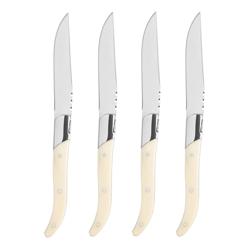
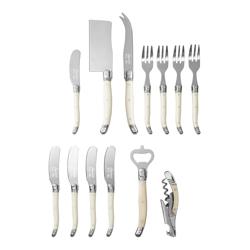
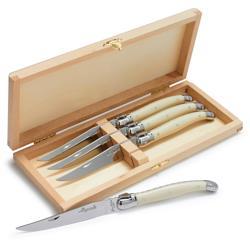
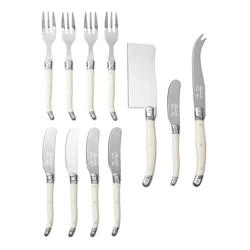
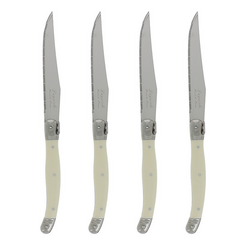
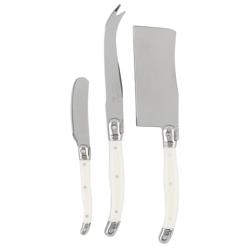
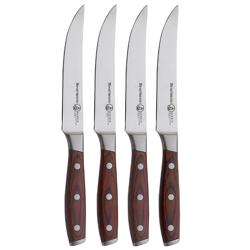
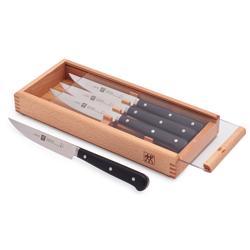
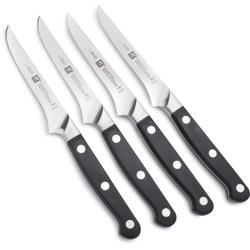
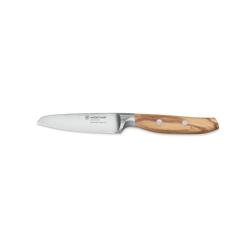
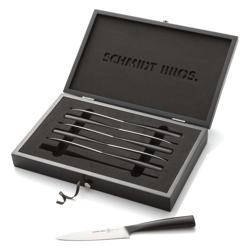
A faux ivory knife handle brings a soft, classic look to the kitchen or dining table without the use of animal ivory. Its pale finish can complement polished flatware, add contrast to darker place settings or sit quietly alongside simple white dinnerware. The appeal is in that balance: a handle that feels decorative enough for a carefully set table yet looks at home beside an everyday cutting board. Faux ivory describes an appearance rather than a single material, so the underlying construction deserves attention. Handles may use resin, molded polymers or other manufactured materials to create an ivory-inspired finish, and their weight, texture and care requirements can differ. Some finishes have an even, creamy color, while others may feature subtle veining or mottling. A smooth surface can emphasize a streamlined silhouette; visible rivets or metal accents can give the same pale color a more traditional character. When coordinating knives with existing flatware, notice whether the handle leans toward warm cream or a brighter off-white. That distinction can be more noticeable beside a dinner plate than it is when a knife is viewed on its own. Matching every finish is not necessary, but repeating a tone or shape helps a mixed table setting feel intentional. Rounded handles can echo curved flatware, while straighter profiles can complement simpler place settings. For a different look with visible grain and natural variation, the
Wooden Handle Knife collection is another direction to consider. Faux ivory’s appeal is its ivory-inspired appearance, but color alone does not establish how a handle will perform. The material description, construction details and care instructions provide the useful distinctions between handles that look similar. Those details matter whether the knife will spend most of its time preparing dinner or being passed around the table.
Comfort becomes especially important when a knife moves from an occasional place setting to a tool used throughout meal preparation. A faux ivory handle should feel secure without requiring a tight squeeze, with enough room for the fingers and no uncomfortable edges pressing into the palm. Handle length, thickness and contour all affect that fit. A slim profile may feel natural for cutting a portion of food at the table, while a fuller grip may suit longer stretches of chopping and slicing. Neither shape is automatically better; the useful choice depends on the task and the person holding it. Surface finish matters as well. A highly polished handle can feel different from a lightly textured one, particularly if hands become damp, so dry hands and a secure grip remain important regardless of material. Balance comes from the whole knife rather than the handle alone. Blade size, handle weight and the way the two are joined influence whether a knife feels nimble or substantial. A full tang, in which the blade’s metal extends through the handle, is one construction detail worth noting, but it does not establish overall quality by itself. Smooth joins, securely fitted components and a comfortable transition between blade and handle also deserve attention. Intended use should shape the blade choice: a serrated edge can help cut through browned crusts, while a plain edge suits many controlled slicing tasks. For food preparation, the handle needs to remain comfortable through repeated movements, such as chopping parsley or slicing several tomatoes. At the table, a manageable size and a shape that rests securely beside a plate may take priority. In a shared household, a less sculpted handle can accommodate different hands and grips. The pale finish sets the visual tone, but the right proportions and blade design make the knife useful beyond its appearance.
Thoughtful care helps preserve both the finish of faux ivory knife handles and the condition of the blades attached to them. Unless the manufacturer specifically permits another method, hand-wash with mild dish soap and a soft sponge, then rinse and dry promptly. Pay particular attention to rivets, seams and the point where the handle meets the blade, since trapped moisture and food residue can collect in those areas. Leaving a knife submerged in a sink makes the blade harder to see and can expose handle components to prolonged moisture. Even a handle described as water-resistant should not be assumed suitable for soaking or repeated dishwasher cycles; the complete knife’s care instructions take priority. Abrasive cleaners and rough scouring pads can mark a polished surface, while unnecessary exposure to strong heat can damage some manufactured materials. After preparing colorful ingredients such as beets or turmeric, prompt cleaning is a sensible precaution for a light-colored handle. For cutting tasks, use a suitable wood or plastic cutting board rather than glass, stone or a dinner plate, reserving table knives for their intended dining use. Store knives so their edges are protected and their handles are not rubbing against loose utensils. A knife block, appropriate blade guards or another secure storage arrangement can help prevent that contact. These practical details also make faux ivory-handled knives a thoughtful gift for someone setting up a kitchen, celebrating a wedding or settling into a new home. For someone who enjoys hosting, consider how the handle color and shape will sit alongside the flatware and dishes already in regular use. For a frequent cook, grip comfort, blade suitability and manageable care are likely to matter more than a perfect visual match. A gift chosen around those habits can become part of an ordinary dinner routine, not just something brought out for special occasions.