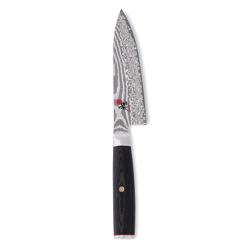
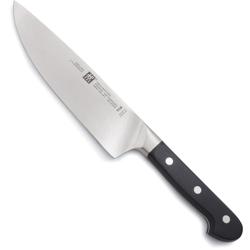
Sandvik steel knives use Swedish-developed stainless knife steels valued for a balance of sharpness, toughness, corrosion resistance and manageable sharpening. In the kitchen, that balance matters when a blade moves from slicing ripe tomatoes to chopping parsley or trimming a chicken breast. A fine edge helps the knife enter food cleanly, while toughness helps it withstand the demands of ordinary cutting without becoming overly prone to chipping. Common grades associated with Sandvik include 12C27 and 14C28N, although the exact steel varies by knife. These steels contain carbon, which supports hardness, and chromium, which helps resist corrosion; 14C28N also contains nitrogen to support its combination of hardness and corrosion resistance. Their relatively fine carbide structure allows manufacturers to create thin, sharp cutting edges suited to precise work. Still, the steel name is only part of what makes a knife perform well. Heat treatment, blade thickness, edge geometry and finishing all influence how easily a knife cuts, how long its edge stays useful and how it responds to sharpening. A thin blade can move through an onion with little resistance, while a thicker blade may feel more substantial but require more pressure through dense ingredients. Neither characteristic can be judged from the steel designation alone. For everyday cooking, the appeal of Sandvik steel is less about chasing the highest possible hardness and more about finding a practical working balance. These steels can take a keen edge without necessarily demanding the sharpening effort associated with some highly wear-resistant alloys. That makes them relevant to cooks who want clean cuts and are willing to give their tools regular, straightforward care. Edge retention is not a fixed promise, however: the cutting surface, ingredients, technique and frequency of use all affect how soon a blade needs attention. A well-made knife in this steel family can serve as a dependable everyday tool, whether the task is preparing a quick lunch or working through a counter full of vegetables for dinner.
The most useful Sandvik steel kitchen knife is one whose shape and fit match the way its owner cooks. A broad, multipurpose blade offers room to guide the edge against curled fingertips and enough height to keep knuckles clear of the cutting board. A curved cutting edge supports a rocking motion through herbs, while a flatter profile can suit cooks who prefer an up-and-down chopping action. Narrower blades are helpful for controlled slicing, and smaller knives give greater maneuverability when peeling an apple, removing a strawberry stem or trimming a blemish from a potato. Serrated edges have a different role, gripping crusty bread or delicate tomato skins rather than relying on the same cutting action as a smooth edge. Across these shapes, steel quality works together with design rather than replacing it. A sharp blade that feels awkward in the hand may be less satisfying than a similarly capable blade with a comfortable grip and familiar balance. Handle contours, surface texture and the transition between blade and handle all deserve attention, especially for longer prep sessions. Wood can offer warmth and a distinctive grain, while synthetic handle materials may appeal to cooks who favor low-maintenance surfaces; care requirements depend on the particular construction. Weight is personal, too. Some cooks appreciate a substantial knife that feels steady through a pile of carrots, while others prefer a lighter tool for repeated slicing. Balance near the grip can make the knife feel easier to control, but there is no single ideal fit for every hand. Length also changes the experience: a longer edge can complete a slice in fewer strokes, while a shorter blade may feel more manageable on a compact board. For someone building a kitchen setup, a few complementary blade shapes are often more useful than several knives that perform essentially the same task. Experienced cooks may instead value a particular profile that fills a gap in their routine.
Good care helps preserve the qualities that make Sandvik steel knives useful in the first place. Stainless steel resists corrosion, but it is not stainproof or immune to rust, especially when food residue, salt or moisture remains on the blade. Hand-washing with mild dish soap, rinsing and drying promptly is generally the best routine, subject to the manufacturer’s instructions. Leaving a knife in the sink risks both edge damage and accidental cuts, while dishwasher detergents, heat and movement can be hard on blades and handles. A wood or suitable plastic cutting board provides a more forgiving surface than glass, stone or ceramic. Using the spine rather than the sharp edge to move chopped ingredients across the board can also reduce unnecessary wear. These are cutting tools, not substitutes for a cleaver, can opener or pry bar; bones, frozen foods and twisting motions can damage even a tough blade. Over time, honing may help maintain an edge that has rolled slightly, while sharpening removes metal to restore a worn cutting edge. The appropriate method depends on the blade, and serrated knives need different attention from straight-edged knives. Following the maker’s recommended sharpening approach is more reliable than assuming every stainless blade needs the same treatment. Protected storage matters as well. A blade guard, suitable knife block or properly used magnetic holder keeps the edge from knocking against other utensils and makes handling safer. For a broader look at related materials and designs, explore
Premium Stainless Steel Knives with the same attention to construction, comfort and intended use. Sandvik steel knives can make thoughtful wedding, housewarming or graduation gifts for someone who enjoys cooking, particularly when the blade shape suits the recipient’s habits. A frequent vegetable cook may appreciate different handling characteristics than someone who regularly slices roasts or portions fish. Paired with a suitable cutting board and a clear understanding of care, a well-chosen knife becomes a useful part of everyday cooking rather than a tool saved only for special meals.