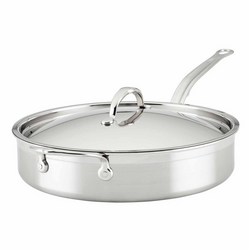
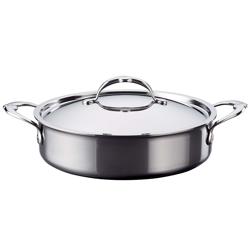
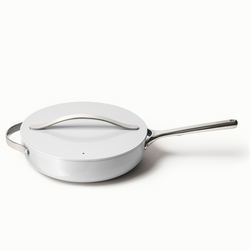
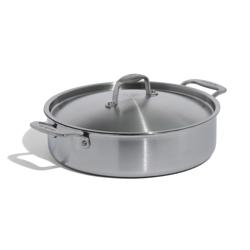
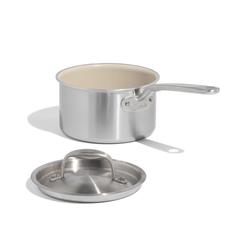
Titanium sauté pans and sauteuses bring useful versatility to the stovetop, with room to brown ingredients, build a sauce and bring the whole dish together in one vessel. A sauté pan typically pairs a broad, flat cooking surface with relatively straight sides, giving chicken cutlets, mushrooms or sliced zucchini space to make contact with the pan while helping contain splashes. A sauteuse often has a more rounded profile and two side handles, making it comfortable for stirring rice dishes, folding greens into beans or carrying a finished meal to the table on a suitable trivet. These names can describe slightly different shapes, so the actual cooking surface, depth and handle arrangement matter more than the label alone. Titanium also deserves a closer look: the term may refer to a titanium-reinforced nonstick coating or a different titanium-based surface treatment rather than a pan made entirely from solid titanium. Many designs rely on other metals within the body to distribute heat. Aluminum or copper layers can help move heat across the base, while stainless steel may contribute structure and durability. Titanium is valued for its strength relative to its weight and its corrosion resistance, but a finished pan’s heft, responsiveness and food release depend on its complete construction. That distinction matters at dinner. A titanium-reinforced nonstick interior can make delicate fish or tender egg dishes easier to release, while a titanium-treated surface without a conventional nonstick coating may behave differently when browning meat or reducing a sauce. The right match depends on the cooking tasks that come up most often, whether that means quick vegetable sautés, pork chops finished with mustard sauce or chickpeas simmered with tomatoes. Neither shape needs to be reserved for elaborate cooking. The combination of a generous base and sides deep enough to hold sauce makes these pans practical for everyday meals, especially dishes that start with browning and finish with a gentle simmer. A well-fitting lid adds another option for softening sturdy vegetables or cooking chicken through without letting the sauce reduce too quickly.
Size and handling make just as much difference as the cooking surface. Capacity describes how much a pan holds, but the diameter of its flat base determines how comfortably several portions can brown at once. A deeper pan may hold a generous quantity of stew while offering less browning space than a wider, shallower one. For a cook preparing dinner for one or two, a manageable pan that fits the burner can be more useful than an oversized vessel that feels awkward at the sink. Larger households and people who cook extra portions may appreciate more surface area, particularly when searing meat in batches or tossing pasta with vegetables and sauce. Enough room between ingredients helps moisture escape rather than collect, encouraging browning instead of steaming. The pan should also suit the stove: induction compatibility depends on a magnetic base, not the word titanium, and a flat bottom is especially important for good contact on smooth cooktops. A long handle offers control when moving a sauté pan, while a helper handle can make lifting a full pan more comfortable. Two short handles on a sauteuse can be convenient for oven placement and serving, although oven mitts are still essential whenever handles become hot. Weight is worth considering with the meal included; a pan that feels comfortable empty will feel different filled with sauce and several portions of chicken. For stovetop-to-oven cooking, check the stated oven limits for the pan and lid separately, since glass, handle materials and coatings can have different restrictions. Broiler compatibility also needs its own confirmation. A lid helps retain moisture for covered simmering, while cooking uncovered allows excess liquid to evaporate. Pouring edges and handle shape can make transferring sauce or serving at the stove feel more controlled. These practical details are especially useful in a kitchen where one pan needs to cover several jobs, from a quick lunch to a dinner with a few extra places at the table.
Care habits help preserve the qualities that make titanium cookware appealing. Titanium reinforcement or treatment does not automatically make every surface scratchproof, suitable for metal utensils or safe at any temperature. Wood and heat-resistant silicone utensils are gentle everyday choices, especially for coated interiors, and the manufacturer’s instructions remain the best reference for permitted tools and heat settings. Moderate heat is often enough for routine sautéing, particularly with nonstick surfaces, and an empty coated pan should not be left heating unattended. Uncoated or differently treated interiors may call for another approach to preheating and browning. Matching the technique to the surface helps avoid frustration when a chicken breast sticks before it has developed a crust or a delicate fillet needs a gentler release. After cooking, letting the pan cool before washing reduces the risk of warping from sudden temperature changes. Warm water, mild dish soap and a soft sponge are a dependable starting point when consistent with the care instructions; stubborn residue is better softened with soaking than attacked with an abrasive scrubber. Dishwasher suitability varies, and hand-washing can be a sensible choice for protecting finishes and keeping handles and rims clean. Thorough drying and a protective layer between nested pans help prevent storage wear. For someone building a cookware collection, a sauté pan or sauteuse can complement smaller vessels rather than duplicate them. While the wider pan handles chicken, vegetables or a pasta finish,
Titanium Saucepans offer a complementary shape for tasks such as warming broth, preparing oatmeal or making a separate sauce. A sauté pan or sauteuse can also be a thoughtful housewarming or wedding gift for someone who enjoys cooking complete meals at home. The most useful choice reflects that person’s stove, storage space, preferred recipes and comfort with upkeep, giving the pan a clear role long after its first meal.